



Total Distance: 10.3 miles
Time: 5 hours 30 minutes
Points of Interest:
Tadpole Bridge
Rushey Lock
Pillboxes
Radcot Lock
Old Man’s Bridge
Radcot Bridge
Grafton Lock
Kelmscott Manor
Buscot Lock
St Lawrence Church
St John’s Lock
Statue of Old Father Thames
Ha’penny Bridge
We had a bit of a lie in this morning, breakfast wasn’t being served until 8am, so it was a bit of a luxury on this long walk. Breakfast was good, although the bacon slightly overdone and dry, and there were no beans but we are a world away from some greasy spoon.
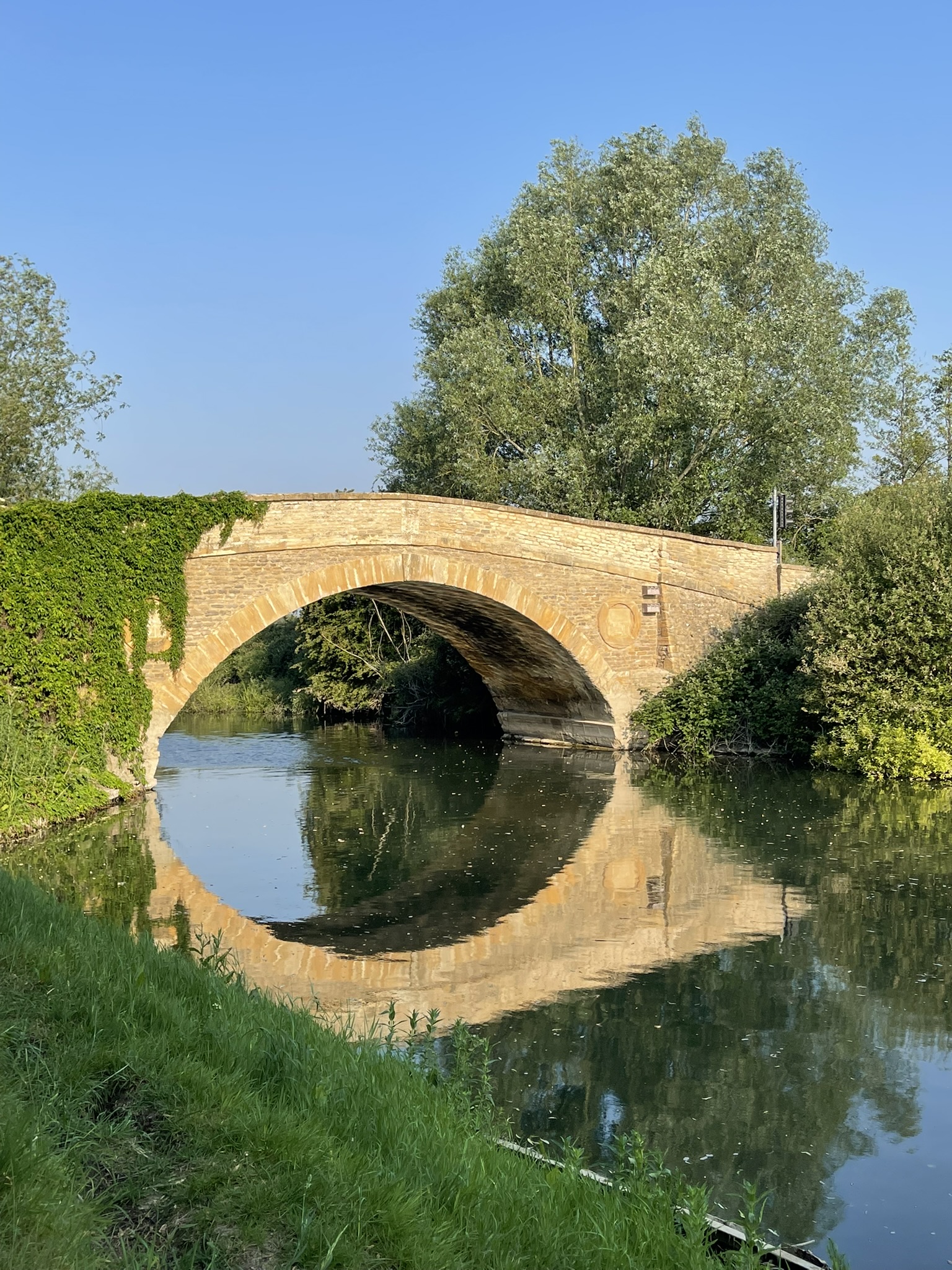
We were packed up and out the door by nine. It was a lot cooler today than the furnace of recent days, though it was clear the heat would return. So we made the most of the early freshness. We made our way over Tadpole bridge and rejoined the path. The bridge dates from the late 18th century, with the earliest reference to it being in 1784. It is built of stone, and consists of one large arch.
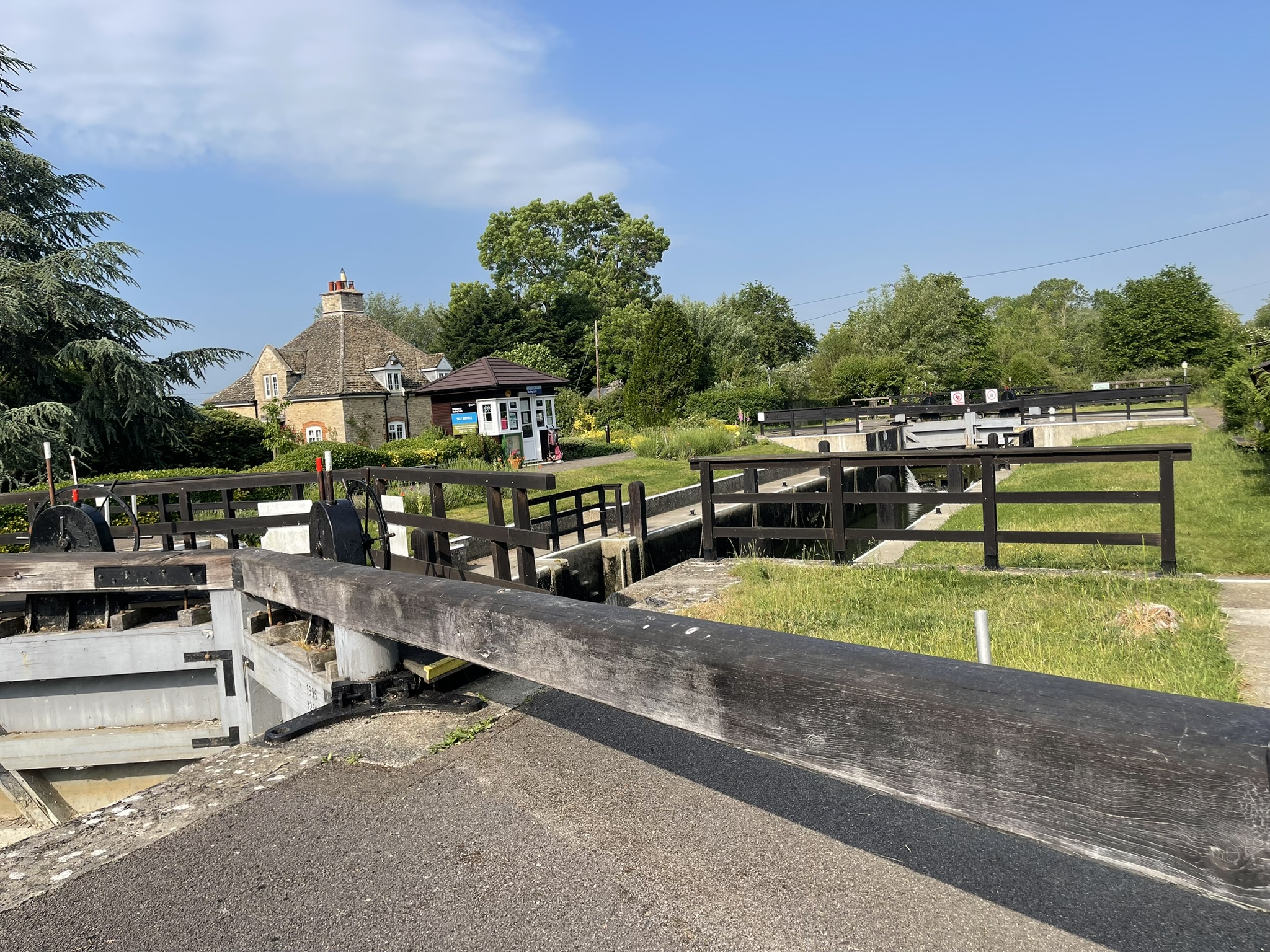
The first lock of the day, and a peaceful one was Rushey Lock. The lock was built in stone in 1790 by the Thames Navigation Commission, on the northern bank of the river at a considerable distance from any village. Before the pound lock was built, the site had no previous weir – following a survey in 1790, it was deemed a better location than Old Nan’s Weir about a mile upstream, which was found unsuitable. The river is very twisty along this reach – this is the upper Thames at its most meandering, and it makes the walk feel wilder and more remote than anything below Oxford.
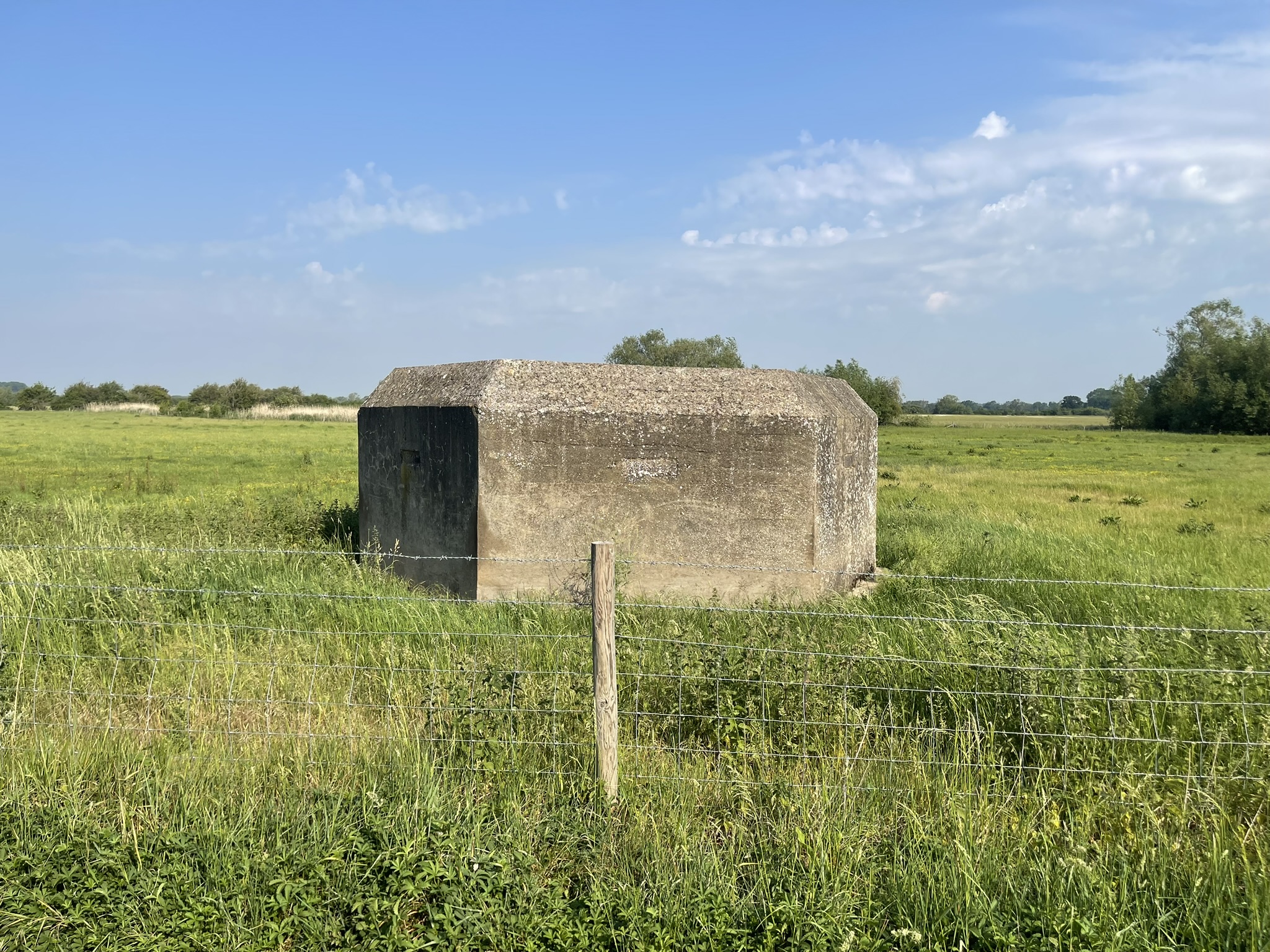
Pillboxes start appearing again not long after Tadpole Bridge and keep turning up all the way to Lechlade. Squat, hexagonal concrete structures sit in the long grasses of the flood meadows, sometimes on their own, and sometimes in clusters. These were built as part of Britain’s anti-invasion preparations during the Second World War, placed along the Thames as part of a defensive line intended to protect London. There are nine pillboxes along the Thames Path between Lechlade and Radcot alone. Standing in these empty meadows today, it’s genuinely hard to imagine the strategic thinking. The remote water-meadows of West Oxfordshire seem an unlikely route for a German division – but these silent concrete boxes remain as a strange, understated memorial to how seriously invasion was feared in 1940.
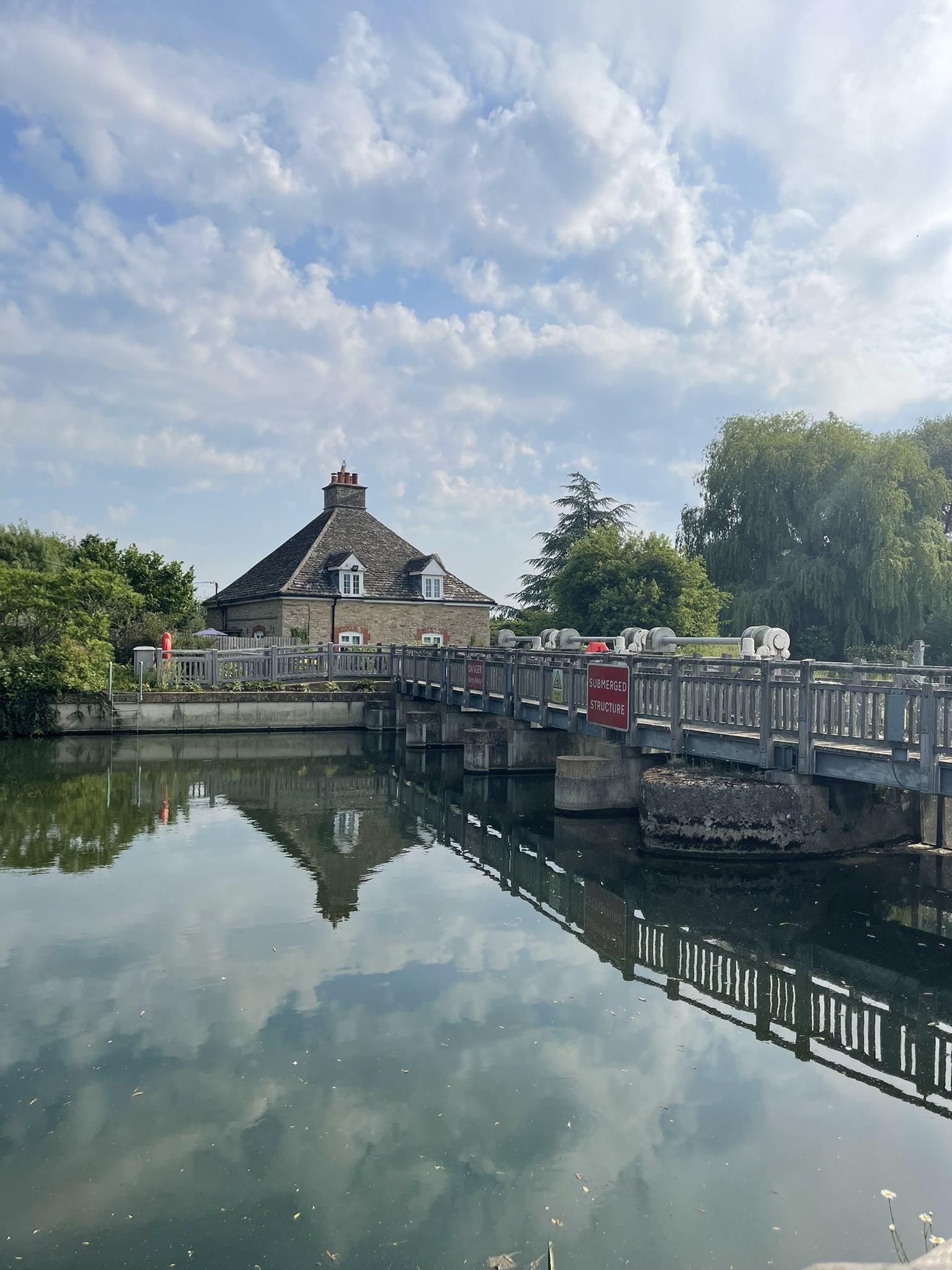

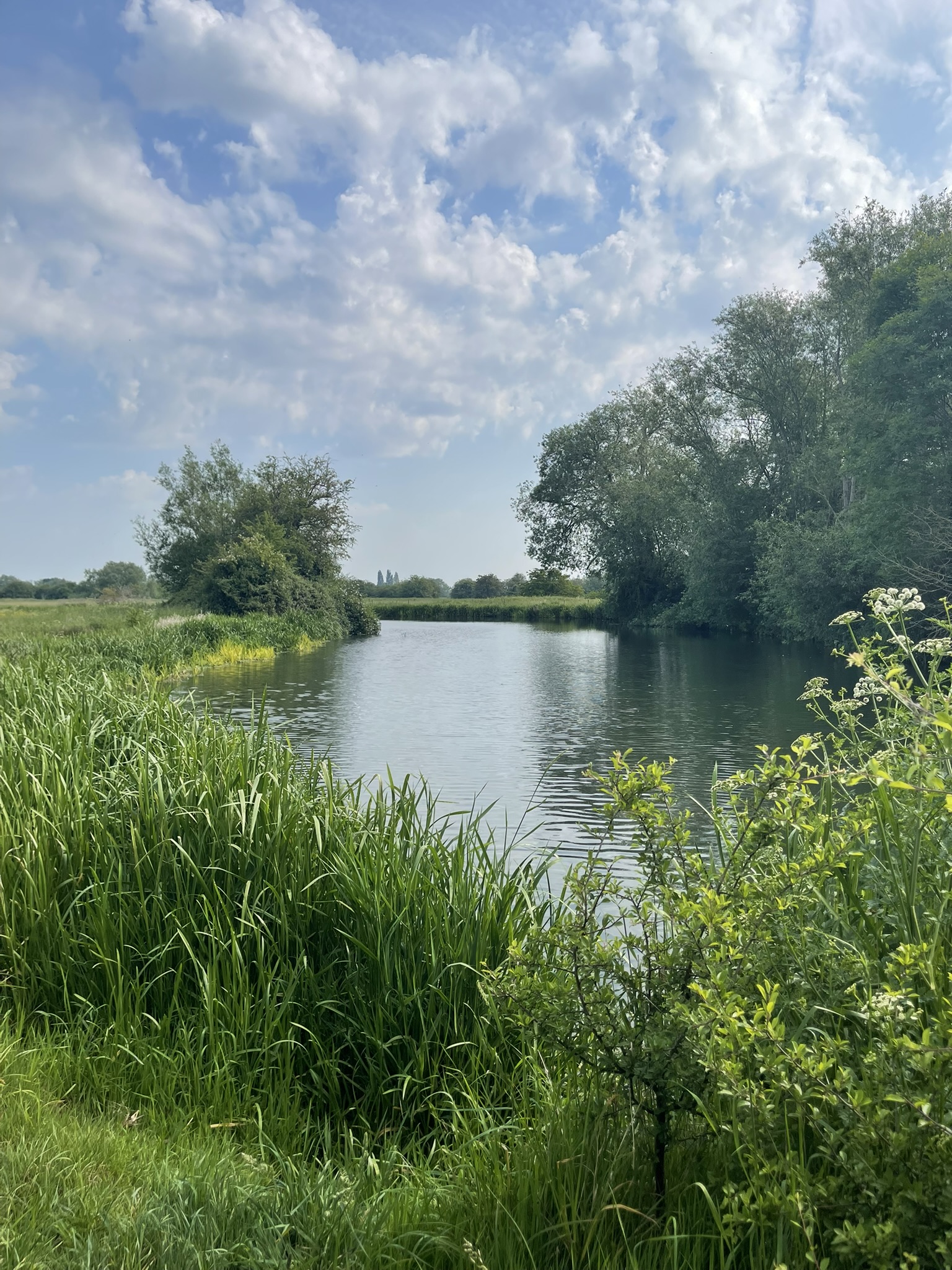
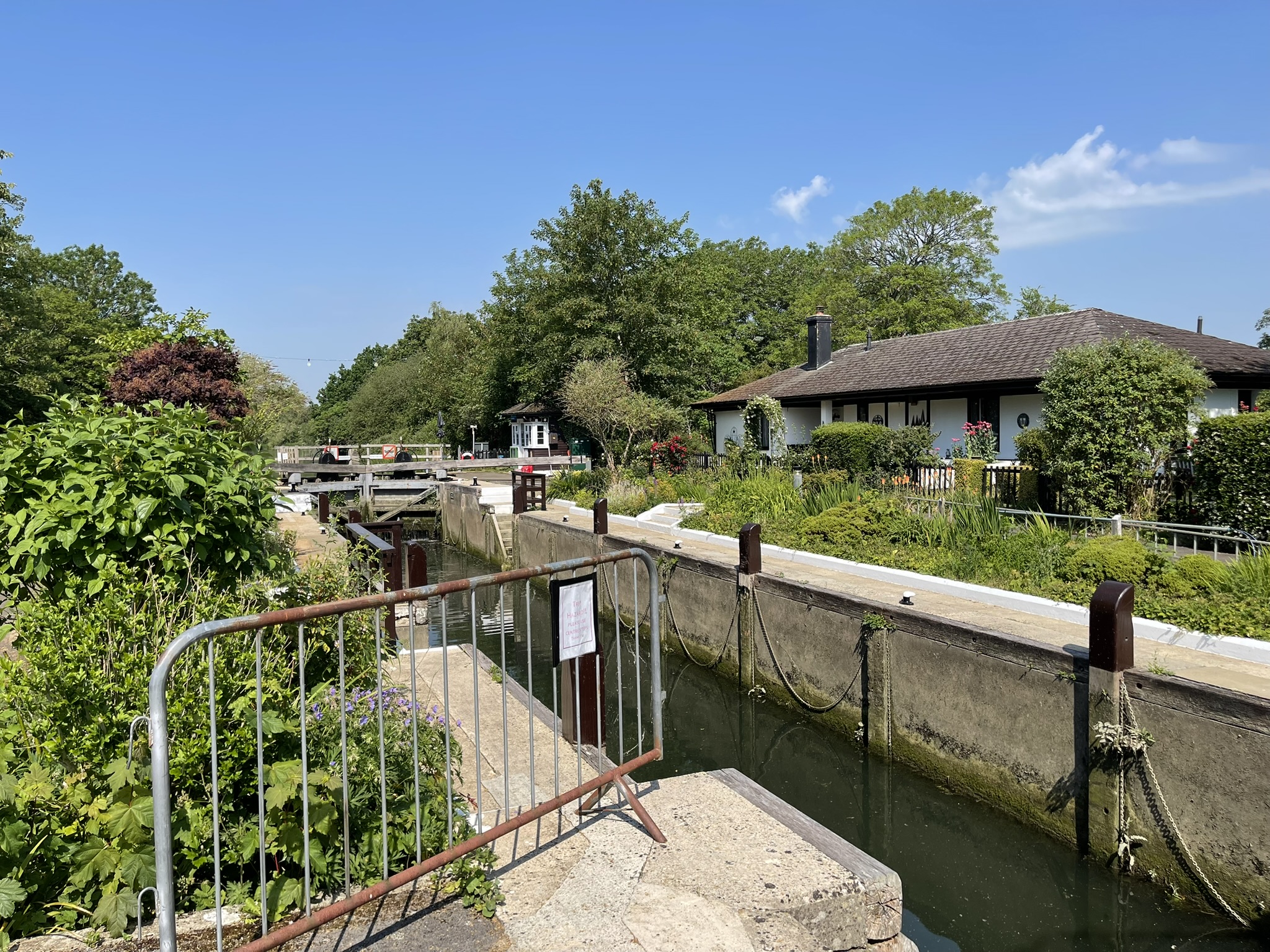
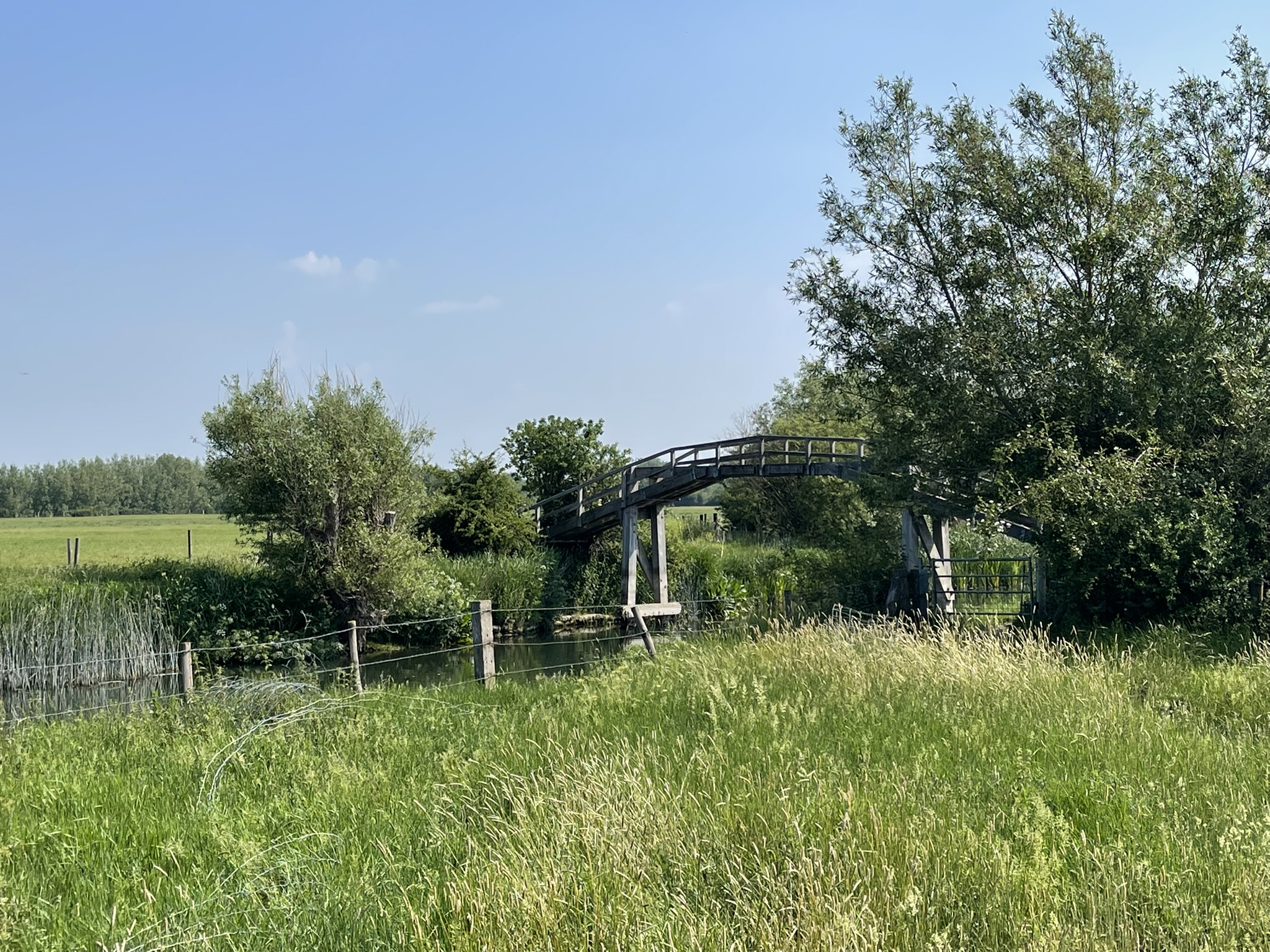
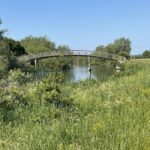
A short distance before Radcot Lock, you find Old Man’s Bridge, built on the site of a former weir. Radcot Lock itself was a welcome rest stop, the temperature already on its way back up.
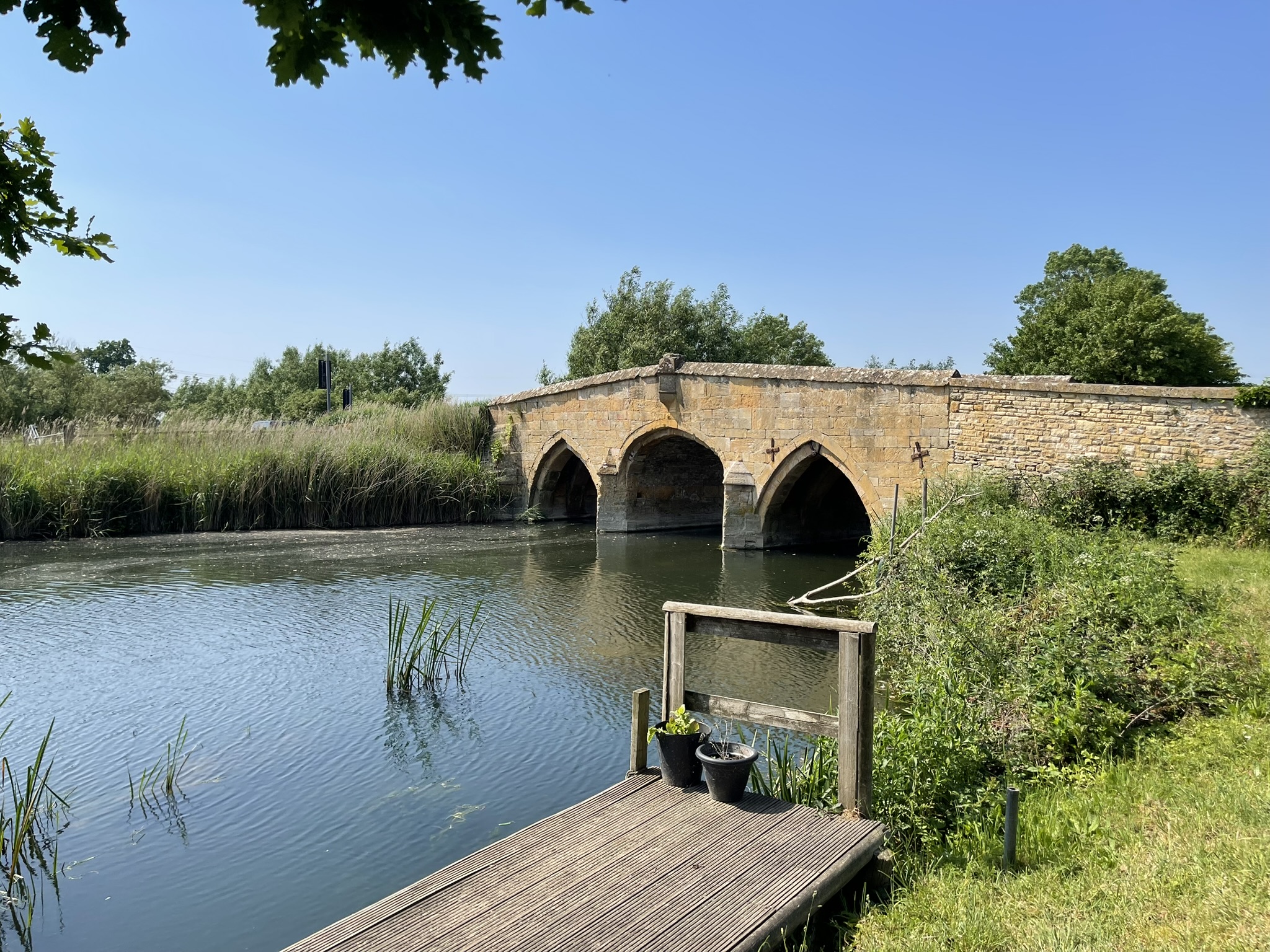
Just a little further along from the lock is Radcot Bridge which is the oldest standing bridge on the Thames, its core built around 1200 with pointed arches of Taynton stone. Cistercian monks from Saint Mary at Cîteaux in Normandy were granted the land to build it by King John. It has seen more than its share of history. The Battle of Radcot Bridge was fought here on 19 December 1387, between troops loyal to Richard II, led by his favourite Robert de Vere, and an army led by Henry Bolingbroke – the future Henry IV. The central arch of the bridge was reportedly demolished as a trap during the battle. Then, centuries later, during the Civil War, Royalist forces captured the bridge and established a garrison at nearby Radcot House to protect the supply route to loyalist Oxford. They held out against the Parliamentarians until May 1646, when the bridge was finally recaptured – after which Oxford itself fell to the Roundheads. The bridge today sits quietly over a side stream, the main channel having been rerouted in 1787. It looks ancient and unassuming. It is ancient and unassuming. We sat by it for a while in the shade .
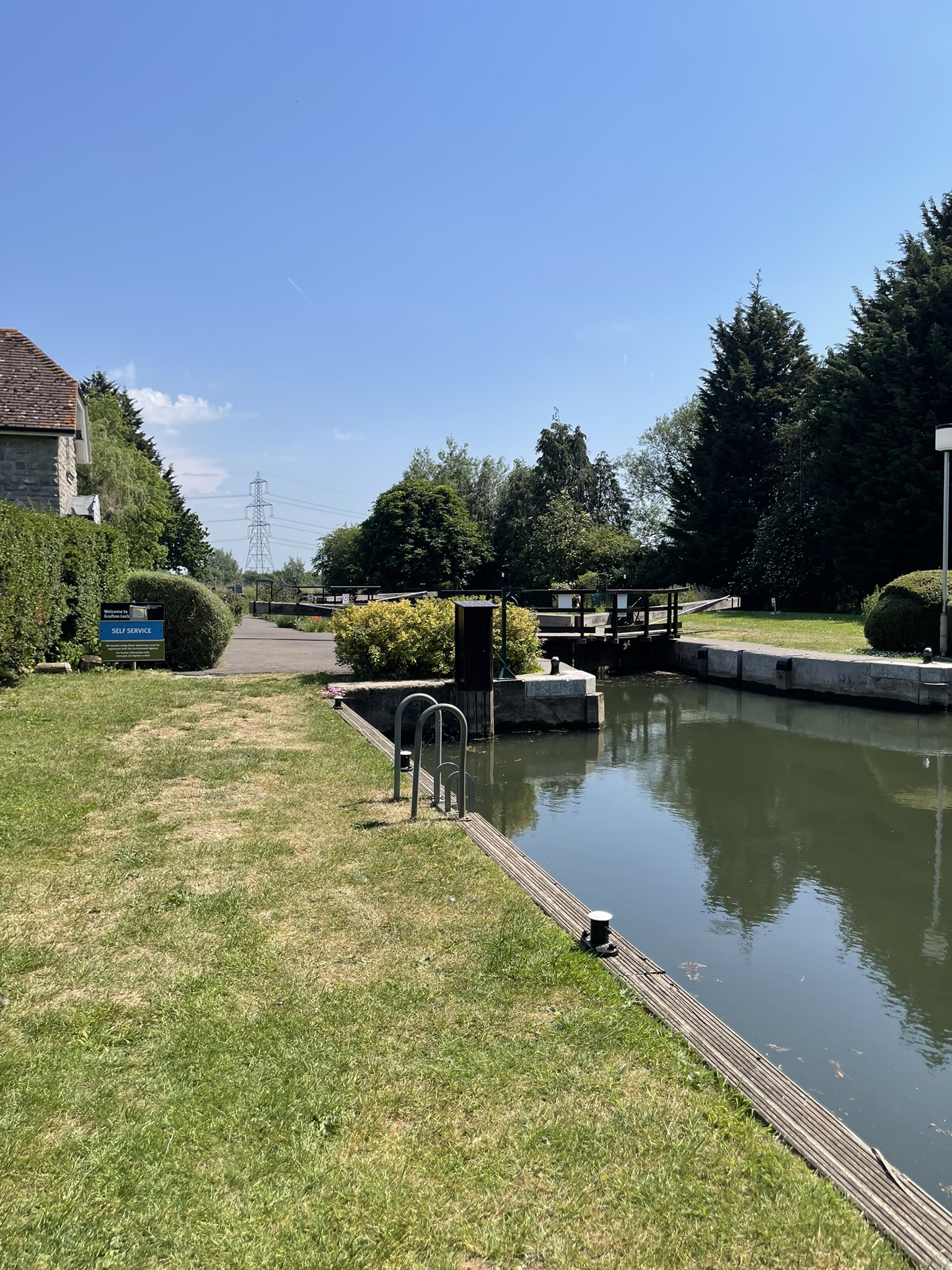
Further along the path is Grafton Lock which was built by the Thames Conservancy in 1896, replacing a former flash lock known as Day’s Weir. Just upstream of here the river passes into true William Morris country – and if you know his work, you’ll recognise why. Morris wrote: “Forget six counties overhung with smoke, forget the snorting steam and piston stroke, forget the spreading of the hideous town; think rather of the pack-horse on the down, and dream of London, small and white and clean, the clear Thames bordered by its gardens green.” Looking out over the meadows at this lock, it’s not difficult to see where that came from.
Not far from Grafton Lock is Kelmscott Manor, a Grade I listed Tudor farmhouse built around 1600 from Cotswold stone, which became the iconic country home of William Morris, founding father of the Arts and Crafts movement. Morris fell in love with the manor in 1871, calling it “a heaven on earth.” He first came looking for “a little house out of London” and initially leased it with the Pre-Raphaelite artist Dante Gabriel Rossetti – though Rossetti left after a few years, having become romantically involved with Morris’s wife Jane. Despite this rather complicated start, Morris kept the manor for the rest of his life, writing about it in an essay titled Gossip about an Old House on the Upper Thames in 1895, treating it as a personal guided tour that captured his instinct for traditional craftsmanship and medieval romance. Morris is buried in the village churchyard, a short walk from the manor. The path doesn’t go through the village itself, but the setting of the whole stretch – the wide skies, the looping river, the Cotswold stone is inseparable from his work.
“Here then are a few words about a house that I love; with a reasonable love I think: for though my words may give you no idea of any special charm about it, yet I assure you that the charm is there; so much has the old house grown up out of the soil and the lives of those that lived on it; needing no grand office-architect, with no great longing for anything else than correctness, and to be like Julius Caesar; but some thin thread of tradition, a half-anxious sense of the delight of the meadow and acre and wood and river; a certain amount (not too much let us hope) of common sense, a liking for making materials serve ones turn, and perhaps at bottom some little grain of sentiment. This I think was what went to the making of the old house; might we not manage to find some sympathy for all that from henceforward; or must we but shrink before the Philistine with one, Alas that it must perish!”
– William Morris, Gossip about an Old House on the Upper Thames
The pillboxes keep appearing and we sat in the shadow of one of them and took another rest. I think Cher just wanted to curl up in the grass and sleep, she was being carried most of the way so I don’t know why she was tired. We pressed on and reached Buscot Lock, which was built in 1790 and is the smallest on the Thames.
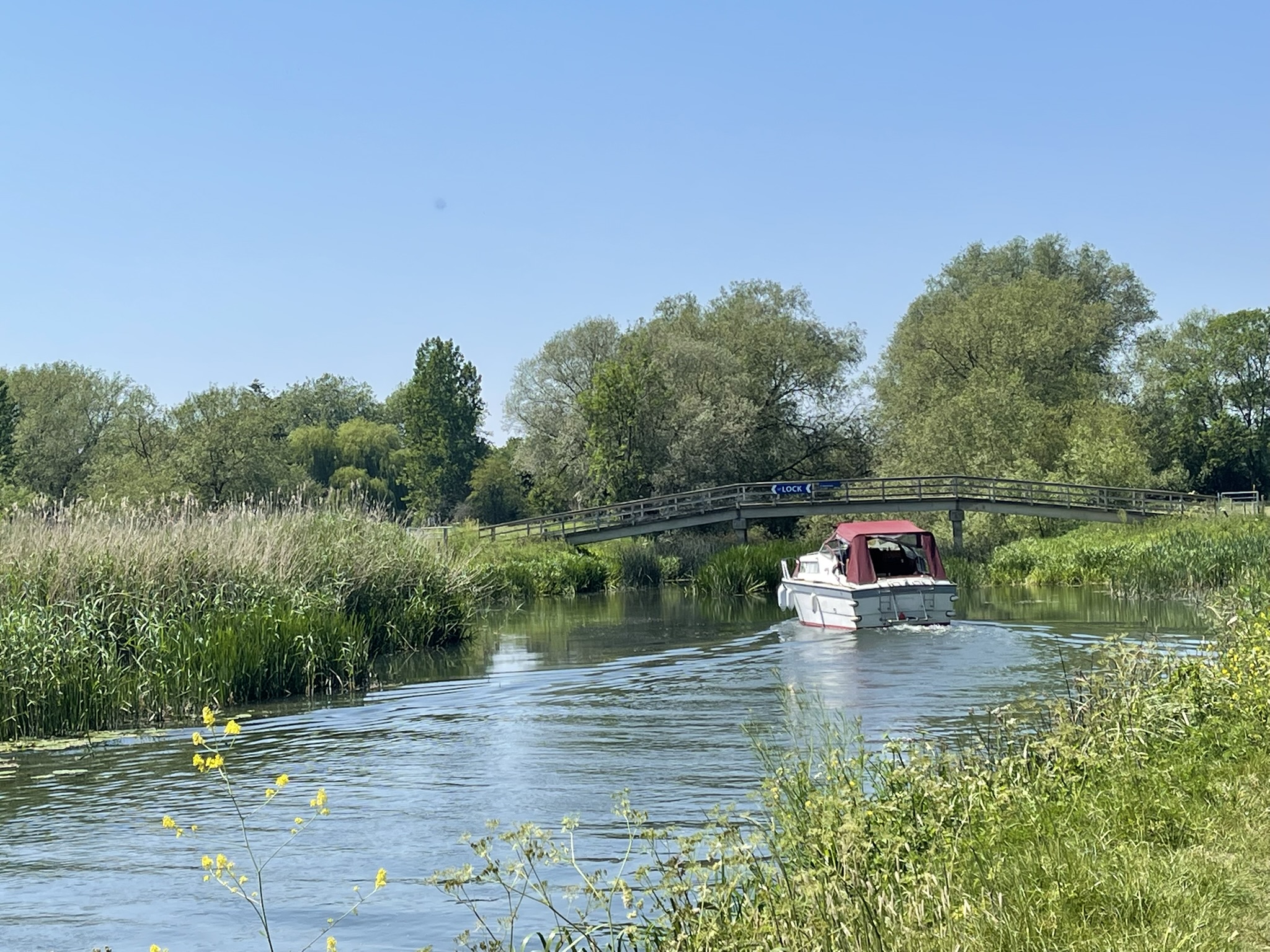
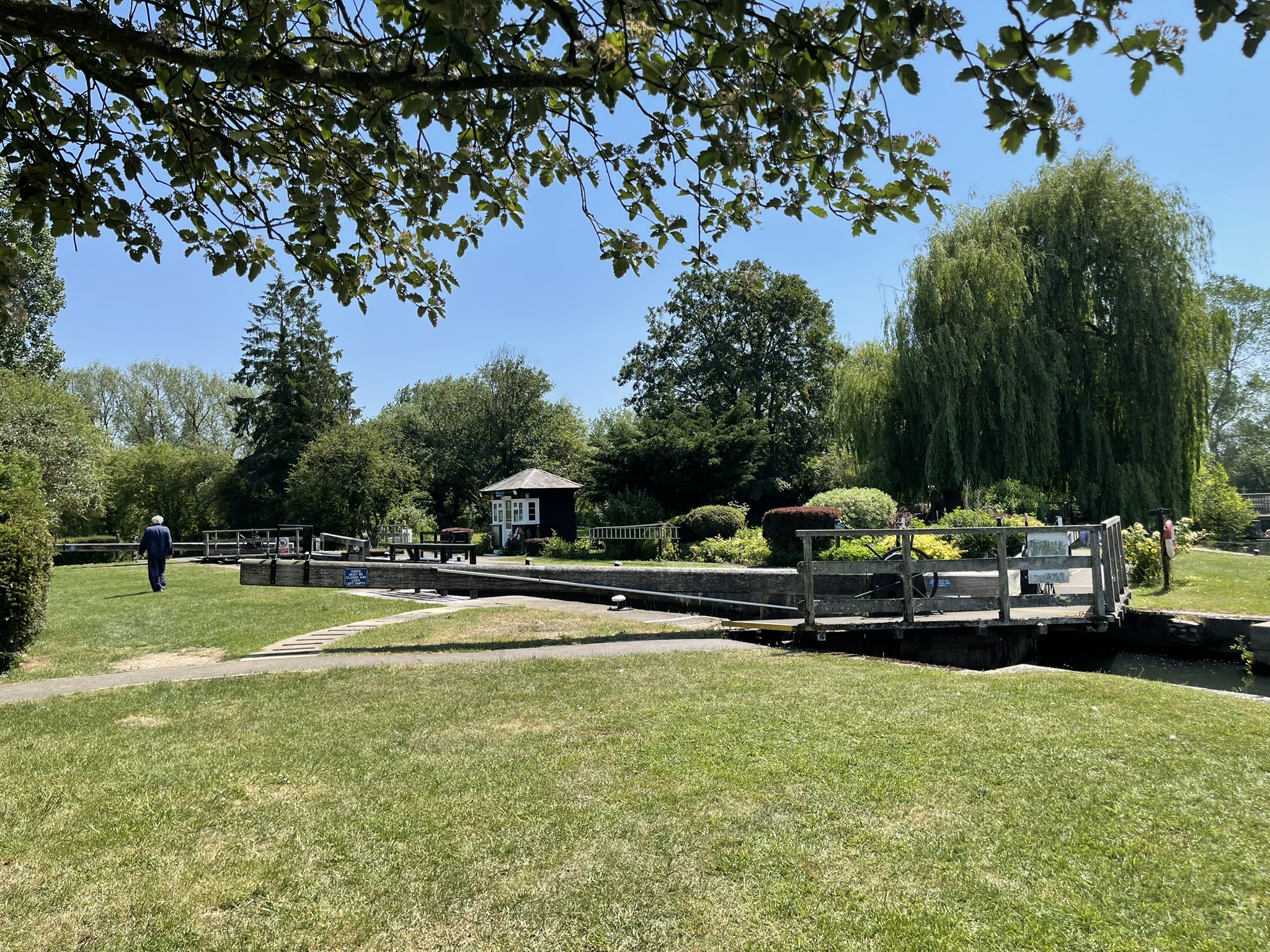
The spire of St Lawrence Church at Lechlade starts appearing on the horizon well before you reach the town – it is one of the great landmarks of the upper Thames and is nicknamed ‘the Cathedral of the Cotswolds’. The English romantic poet Percy Shelley was so struck by it on an evening walk in 1815 that he wrote A Summer Evening Churchyard, Lechlade, meditating on mortality and peace, the spire appearing above the quiet meadows as a kind of signal. By the time it came into view for us, Lechlade felt very close. We were fooled. There was still a mile to go.
“They breathe their spells towards the departing day,
Encompassing the earth, air, stars, and sea;
Light, sound, and motion, own the potent sway,
Responding to the charm with its own mystery.
The winds are still, or the dry church-tower grass
Knows not their gentle motions as they pass.”Extract from A Summer Evening Churchyard, Lechlade – Percy Bysshe Shelley
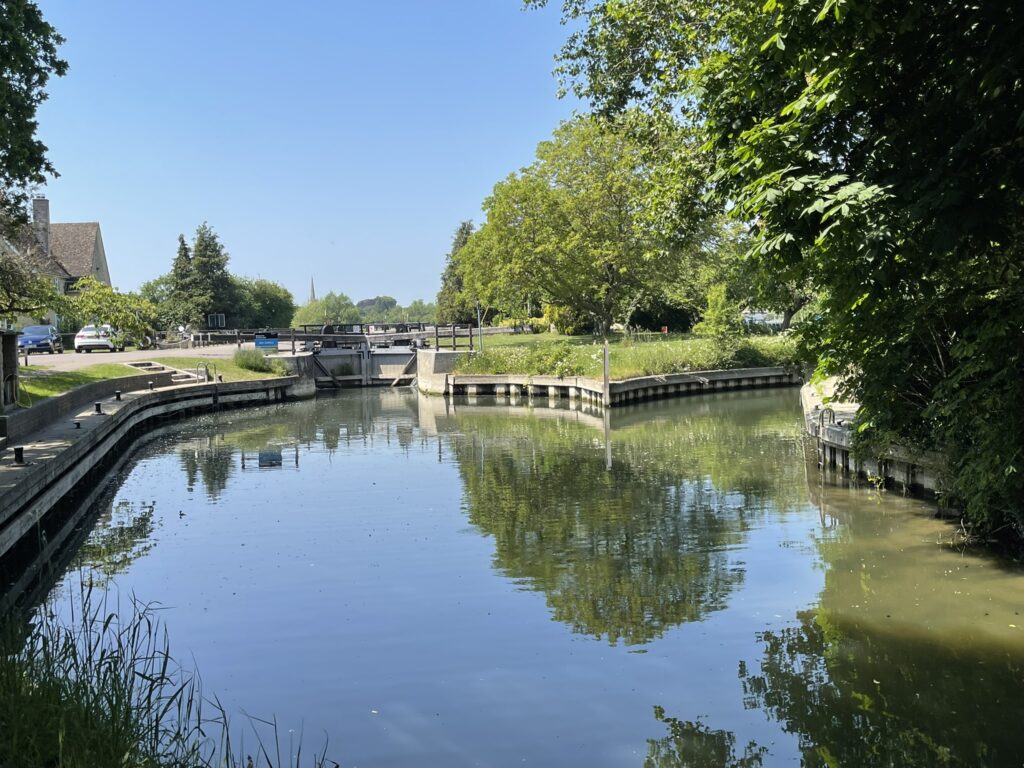
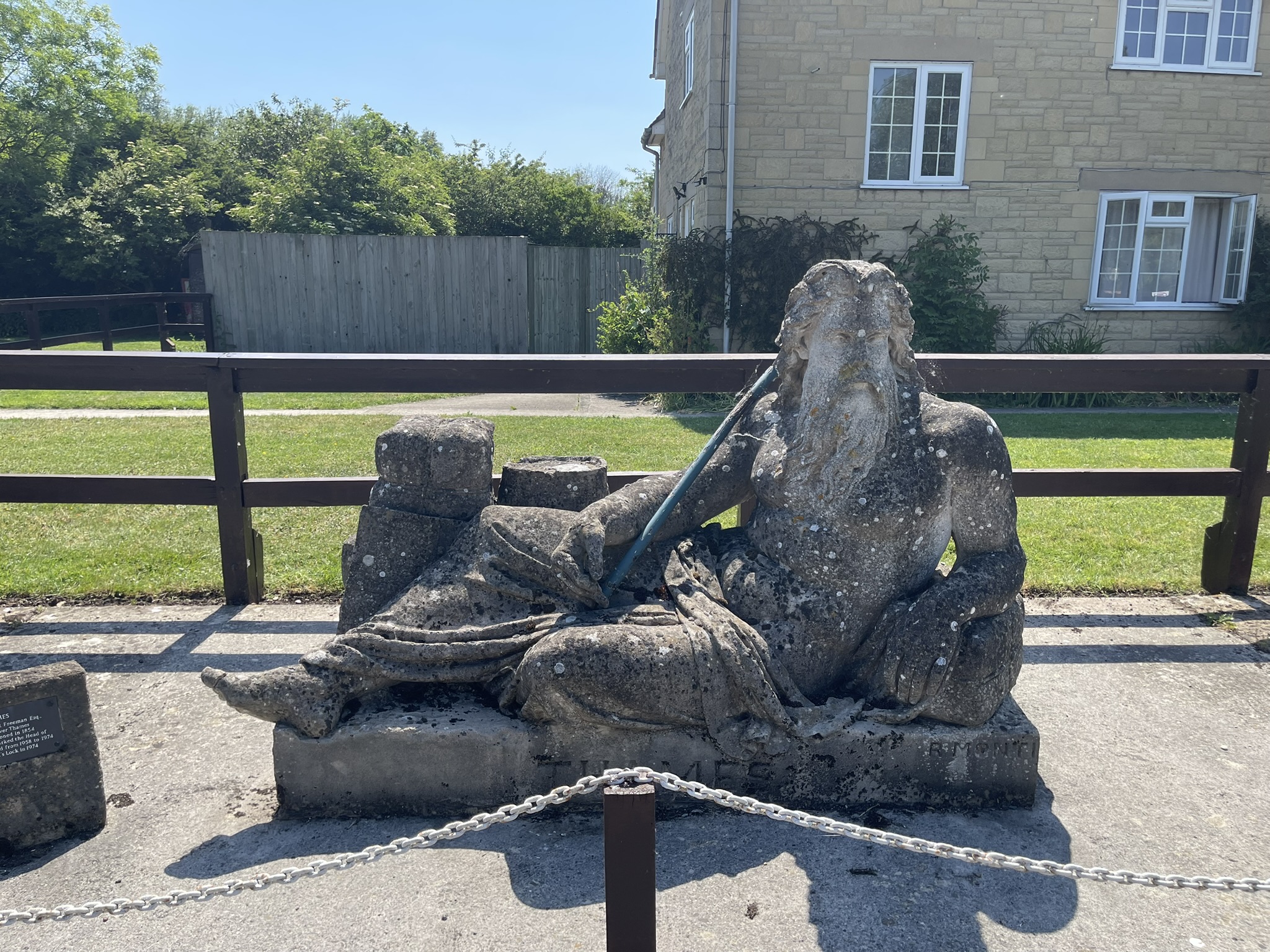
Before reaching Lechlade we past St John’s Lock, the furthest upstream lock on the River Thames. Built in 1790 by the Thames Navigation Commission. Its name derives from a priory established nearby in 1250, which no longer exists. The real draw here is the figure reclining outside the lock house. The statue of Old Father Thames, sculpted by Raffaelle Monti, was commissioned in 1854 for the grounds of Crystal Palace. It was later moved to the traditional source of the Thames at Thames Head, and then relocated here in 1974 to protect it from vandalism. He reclines in stone, watching the boats go through, seemingly untroubled by the journey from Crystal Palace to Kemble to Lechlade. We rested here for a while, very glad to be nearly done.
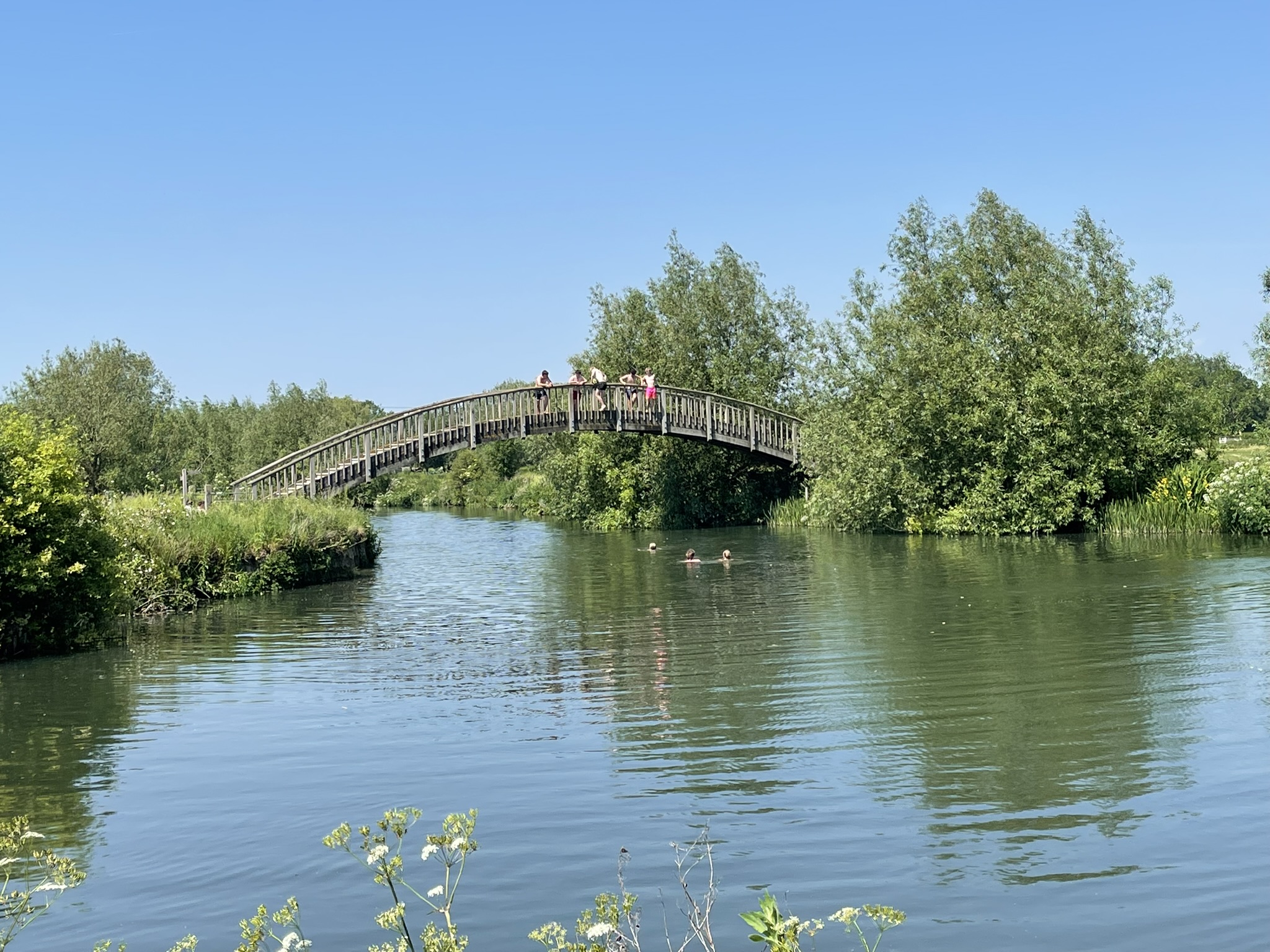
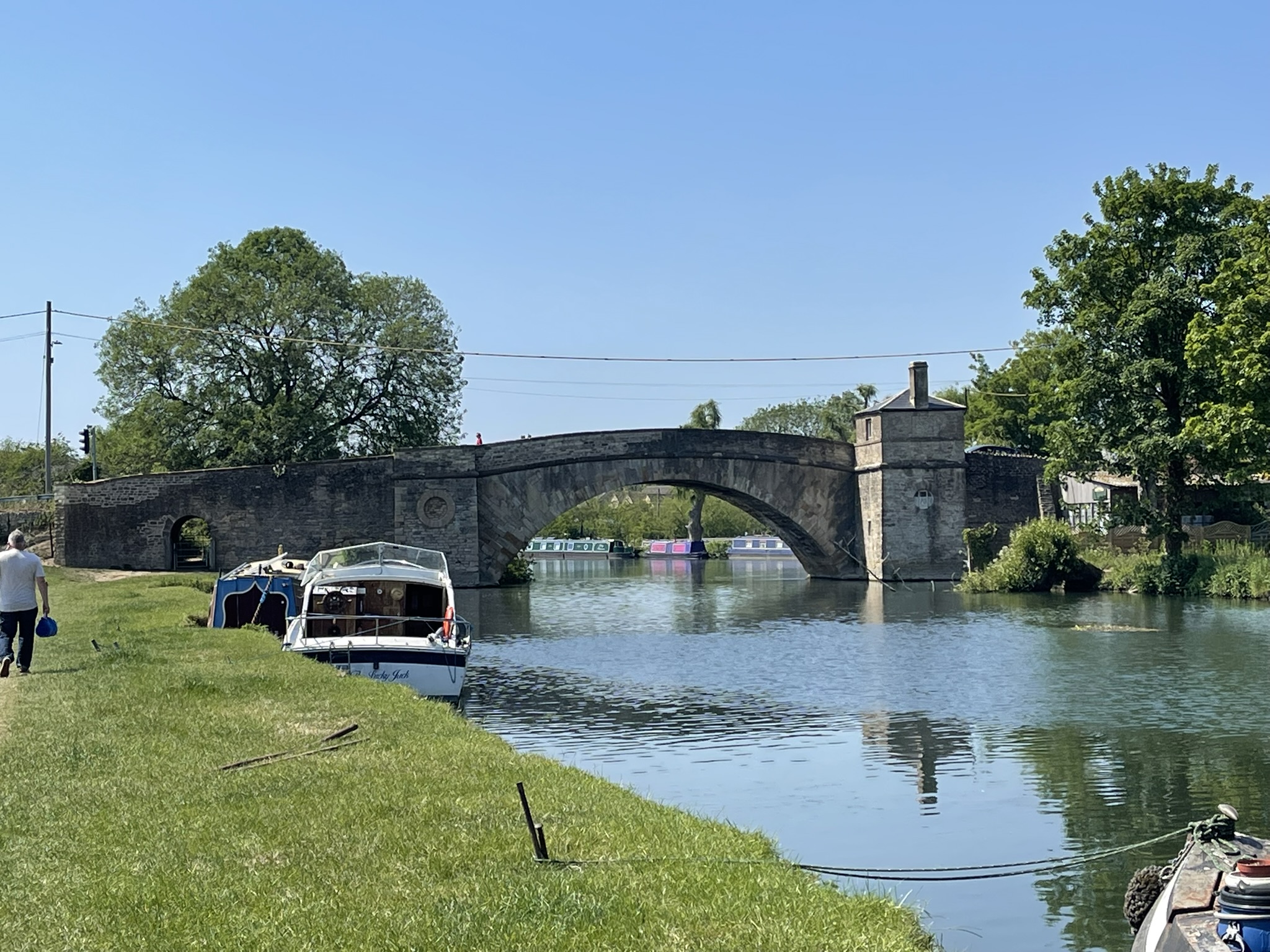
We entered Lechlade over the Ha’penny Bridge. Built in 1782, it was once a toll crossing, the halfpenny charge giving the bridge its name. It is the first of 106 navigable bridges on the Thames heading downstream, and it is from here that consistent downstream navigation becomes possible. Walking through the archway underneath it and into Lechlade felt like crossing a genuine threshold.
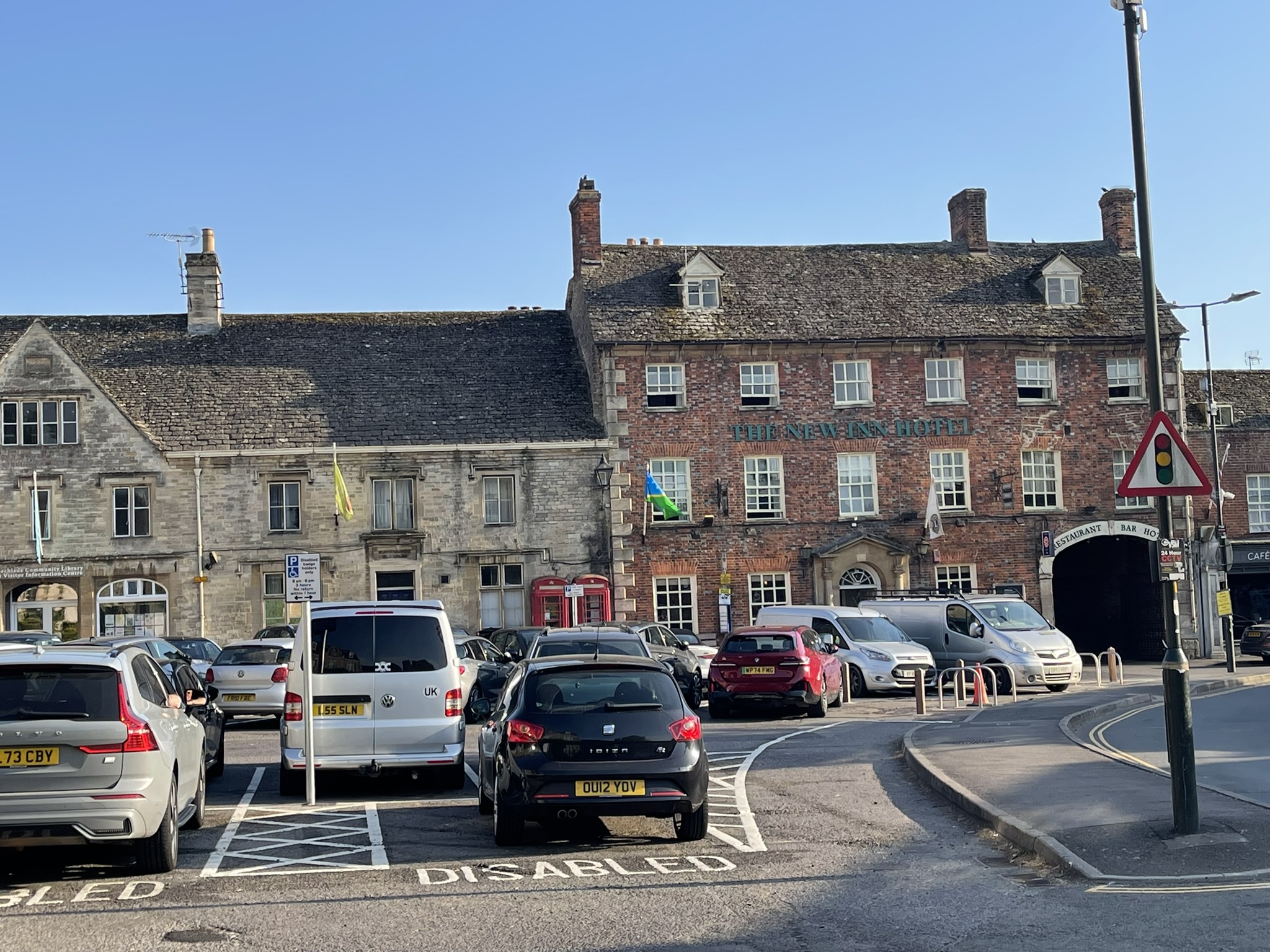
Just over the bridge is the Riverside pub, and we stopped in for a well deserved cider and a lacklustre caesar salad. We took a walk around the town, through the churchyard of St Lawrence Church before going to our accommodation for the night – The New Inn.
It was a mixed picture, the room was good and provided all the amenities, but the beer garden was directly outside the window, which provided zero privacy, and with the warmth of the evening the windows had to stay open. There are worse problems to have at the end of a long day’s walking. But the cider was good. The walk was done. And Lechlade, sitting quietly at the navigable head of England’s greatest river, felt like exactly the right place to be.


Nice site! I notice that the distance calculator seems to have some issues. If I put this exact leg into it, it says that the distance is 15.5 miles, which is quite a bit more than 10.3.
Hi Chris, thanks for the comment, i’ll take a look at the calculations and update them.