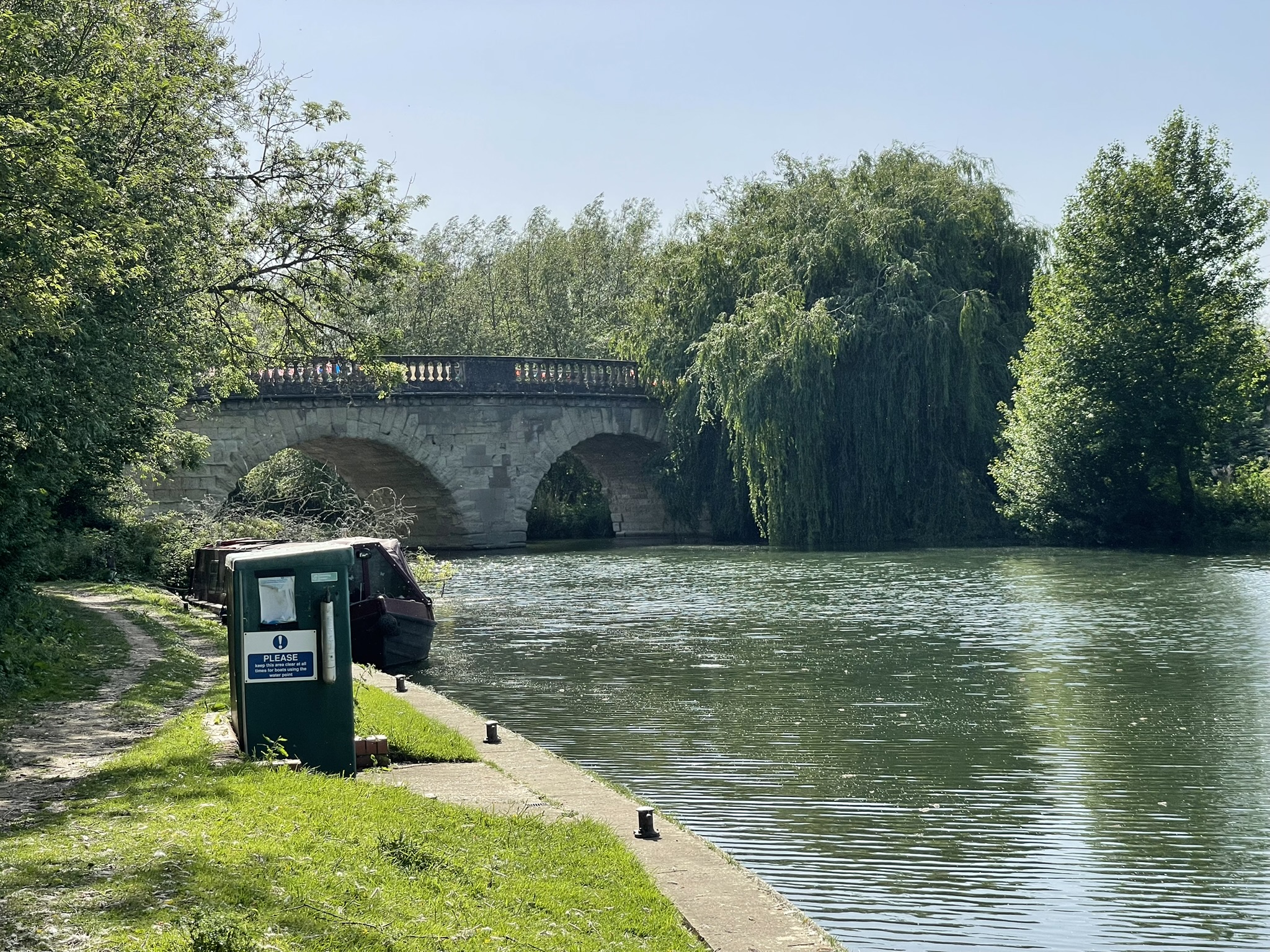



Total Distance: 7.8 miles
Time: 4 hours 30 minutes
Points of Interest:
Folly Bridge
Memorial to Edgar George Wilson
Osney Bridge
Osney Lock
Osney Lock Hydro
Medley Bridge
Port Meadow
Godstow Lock
Godstow Abbey
Godstow Bridge
King’s Lock
Wytham Woods
Eynsham lock
Swinford bridge
If I had known that temperatures were going to break May records this week, I might have reconsidered the timing. But plans were made, hotels booked, and when you’ve committed to walking the Thames Path, you just get on with it.
We got the train into Oxford, arriving at around 11:40am to what was already an oven of a day. Our last finishing point was Folly Bridge, a twenty-minute walk from the station and with energy conservation firmly on my mind, we sensibly got the bus.
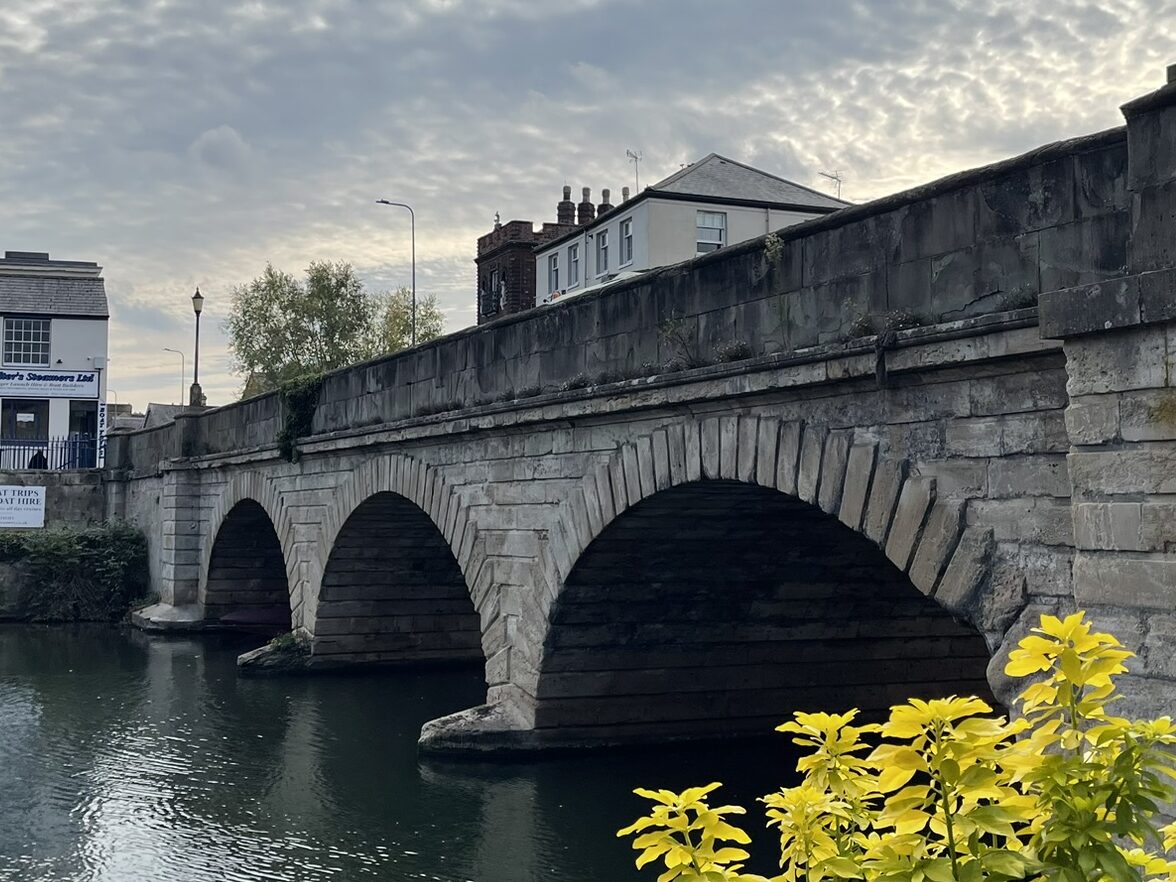
Folly Bridge carries the Abingdon Road south from the centre of Oxford, and the current stone structure was built between 1825 and 1827, designed by architect Ebenezer Perry. The name has an unusual origin, it derives from a building known as Friar Bacon’s Study, which once stood astride the northern bridge-head, and the “Folly” title wasn’t used until the seventeenth century. Before that it was simply South Bridge, part of the long causeway of Grandpont stretching along Abingdon Road. Today it’s one of Oxford’s most popular riverside spots, and on a day like this the river was doing brisk business – swimmers, paddleboarders and punters all making the most of the heat.
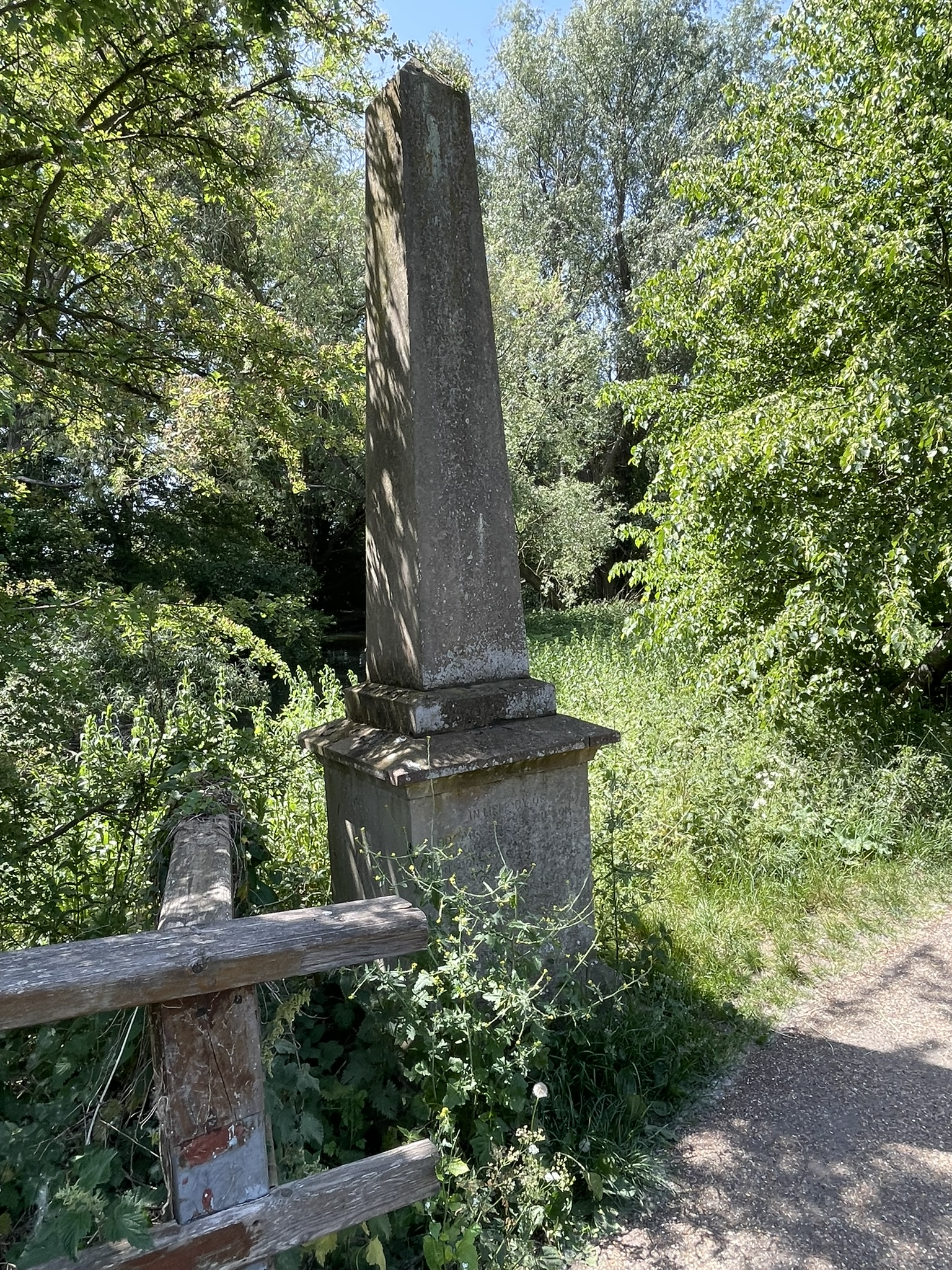
Just along the towpath from Folly Bridge, set quietly beside the path near a small footbridge, is a Grade II listed obelisk. It was erected in memory of Edgar George Wilson, who lost his life on 15 June 1889, aged just 21, while rescuing two boys from drowning. The memorial cost £22, raised by subscription from around 2,000 Oxford citizens, and was unveiled that November by the Mayor of Oxford. In an age of grand monuments to the famous and powerful, there’s something quietly right about this one being here, beside the river, for a 21-year-old nobody’s heard of.
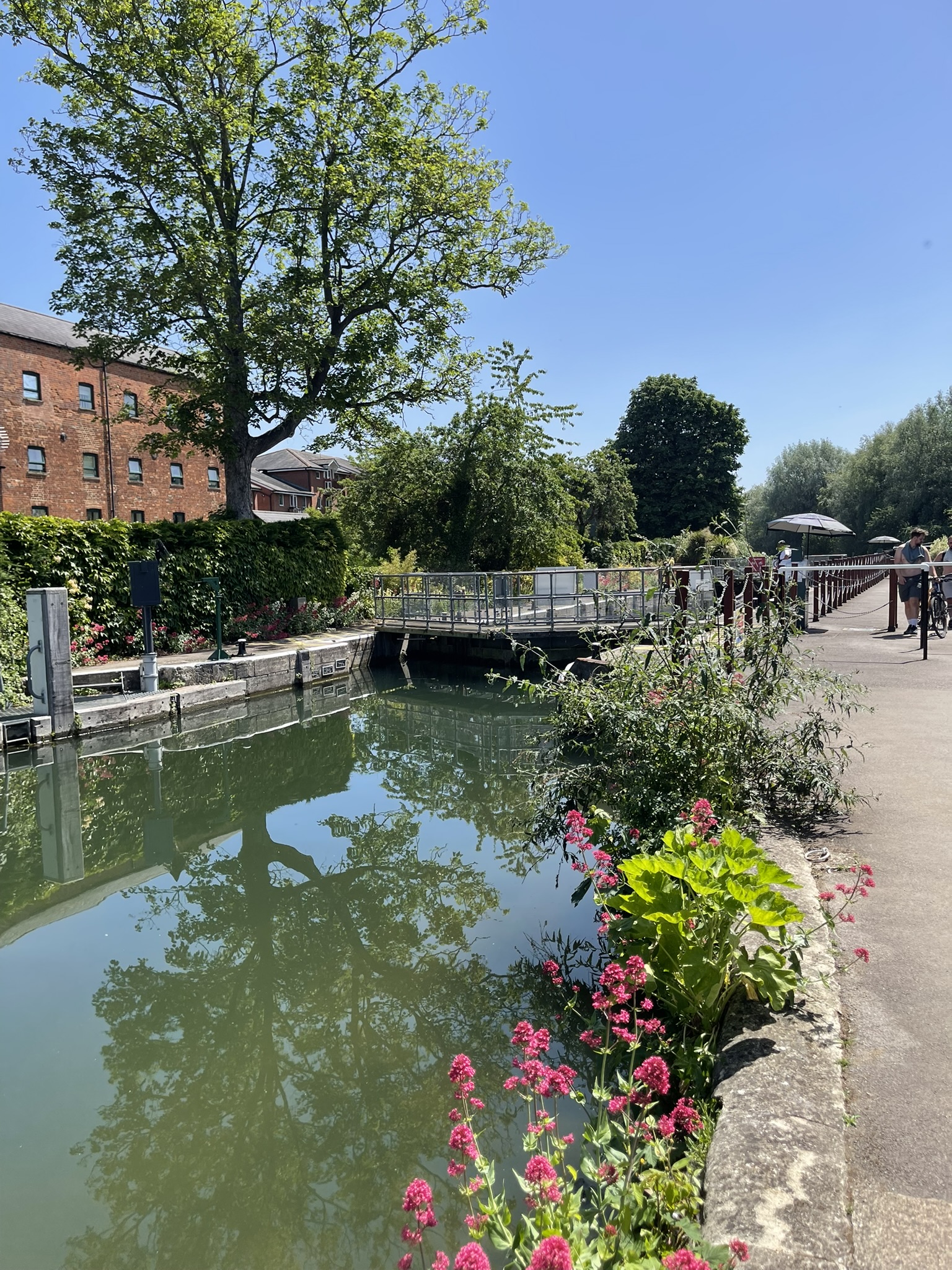
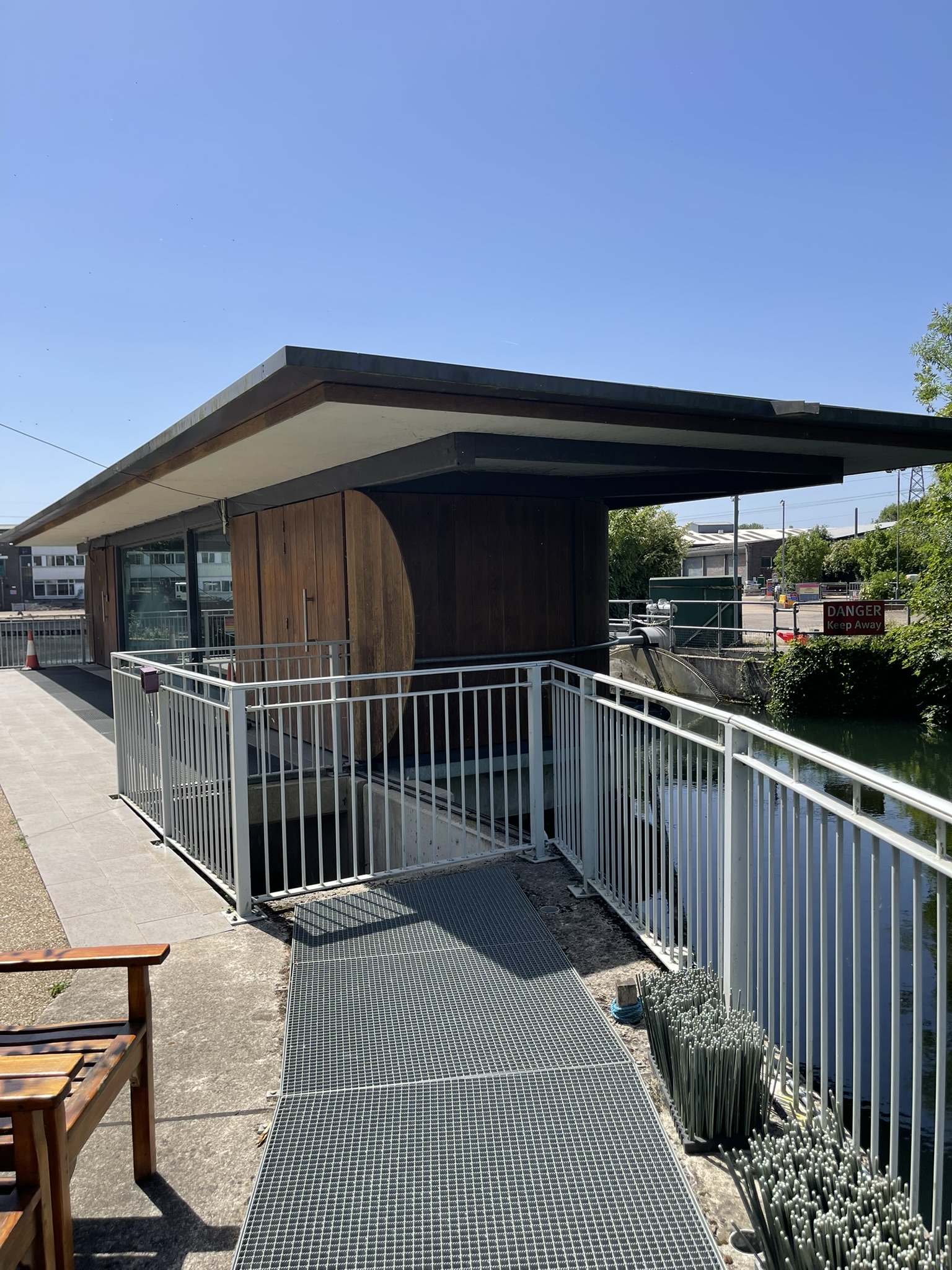
Further along the river we reached Osney Bridge which has the distinction of being the lowest bridge on the River Thames. Just before the bridge is Osney Lock, and beside it, one of the Thames’ more remarkable modern additions. Osney Lock Hydro is a community-owned micro hydroelectric scheme using an Archimedes screw turbine, generating 49 kilowatts of electricity — enough to power around 60 homes — and first generating electricity in May 2015. What makes it especially good is the backstory: the idea was first raised by local residents in 2002, following a community survey on Osney Island, and the project is now owned and managed by West Oxford Community Renewables. It produces on average twice the amount of power generated by the old coal-powered Osney Power Station in its first year of operation in 1892. As part of the construction, a new fish pass was installed, allowing fish to move freely up the river for the first time in 200 years.
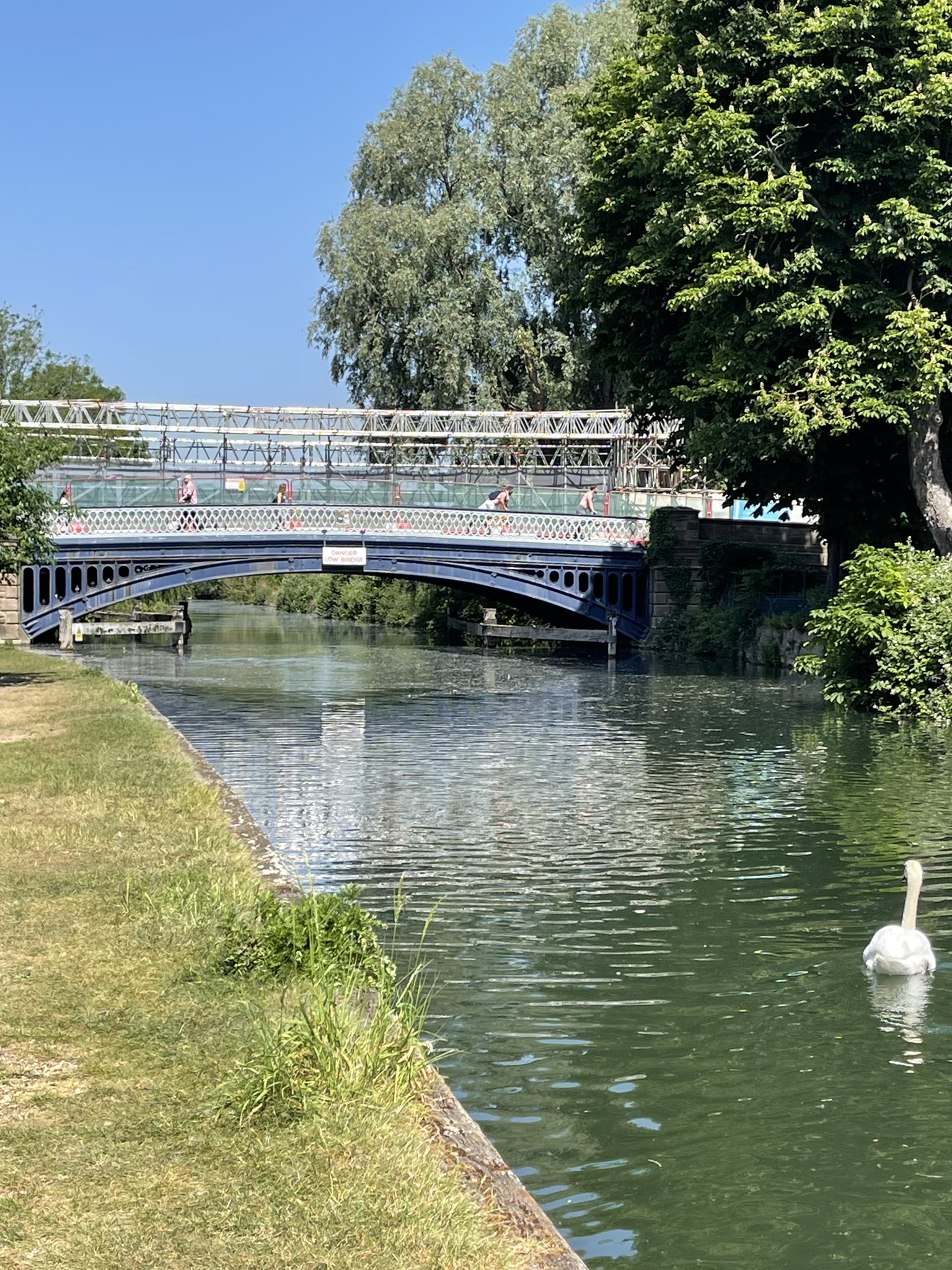
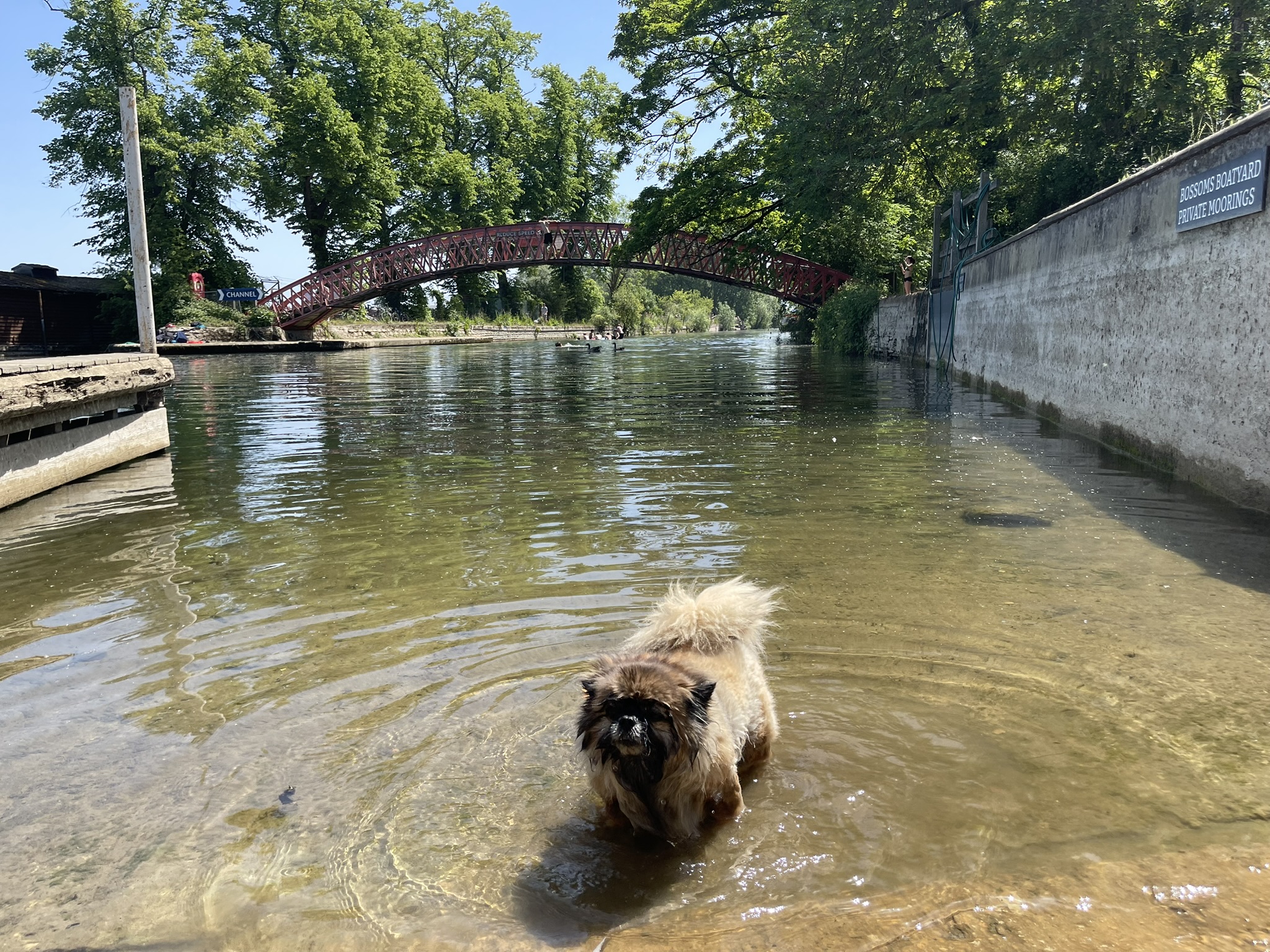
On this sweltering bank holiday, we continued our journey past the crowds of people making the most of the Thames. After crossing Medley Bridge, Cher took the opportunity for a refreshing swim, which provided a much-needed reprieve from the heat.
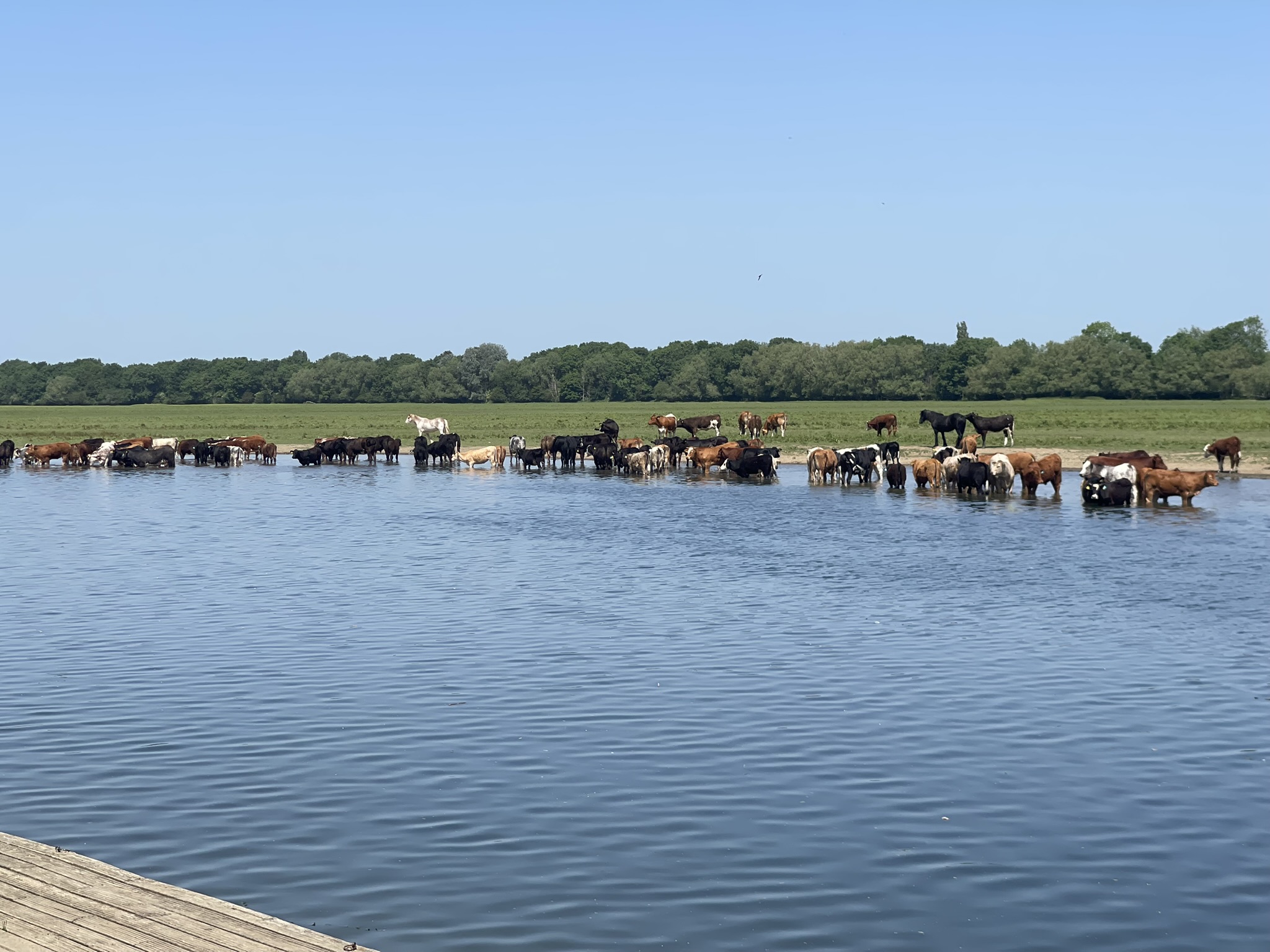
Further along, the path opened up dramatically. Port Meadow on the other side of the river is a large area of open common land beside the Thames, and according to legend has never been ploughed in around 4,000 years. The Freemen of Oxford are said to have been given the 300 acres by Alfred the Great as a reward for helping defend the kingdom against the Danes, and their right to graze animals here free of charge is recorded in the Domesday Book of 1086. Horses and cattle still roam freely here today, and it’s also worth noting that this is where Lewis Carroll – or rather, the Reverend Charles Dodgson – rowed up the river on 4 July 1862 with Alice Liddell and her sisters, the trip that inspired Alice in Wonderland. On a scorching May afternoon, with the meadow glowing gold and the river glittering alongside it, it’s easy to understand the magic of the place.
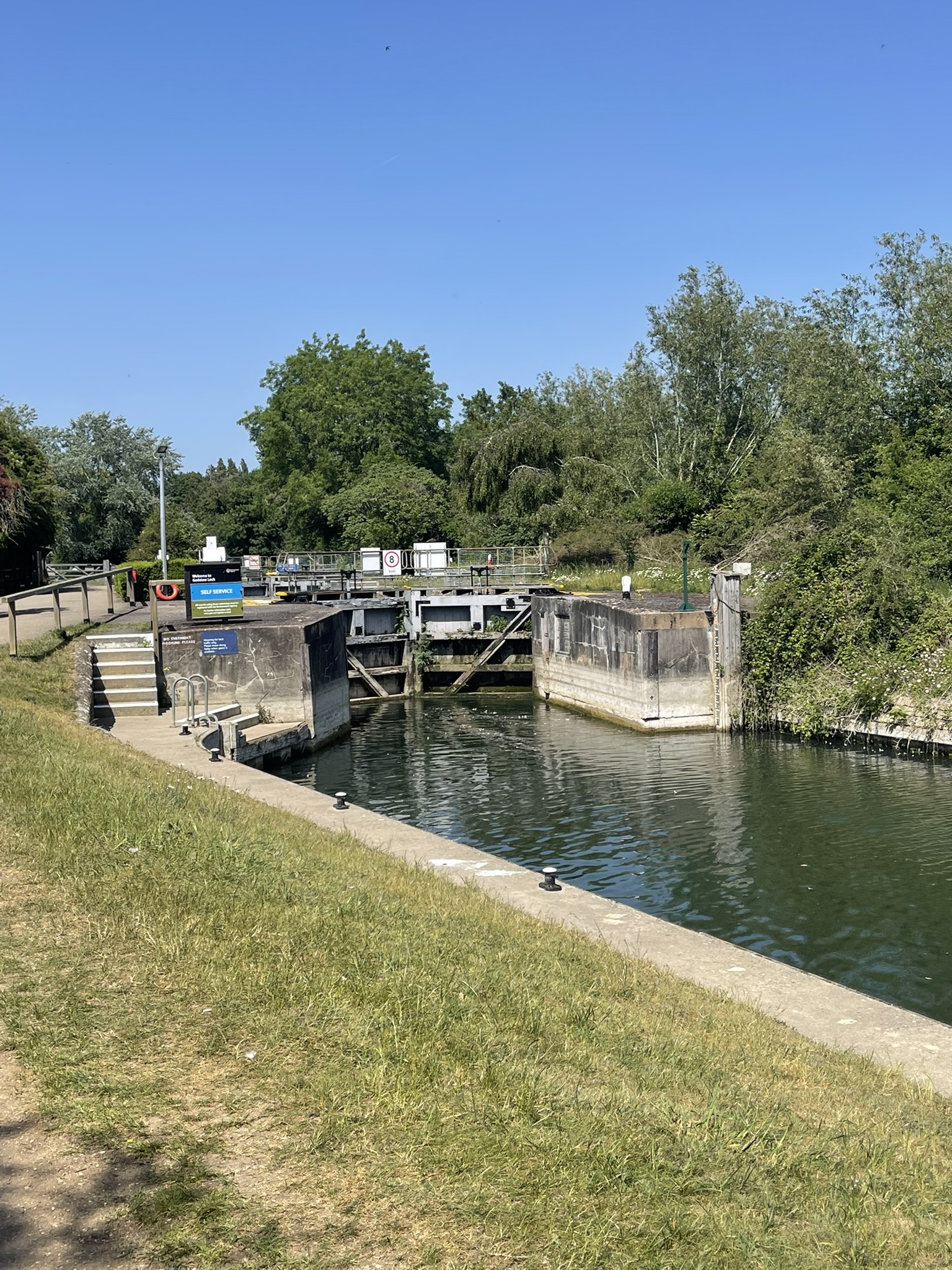
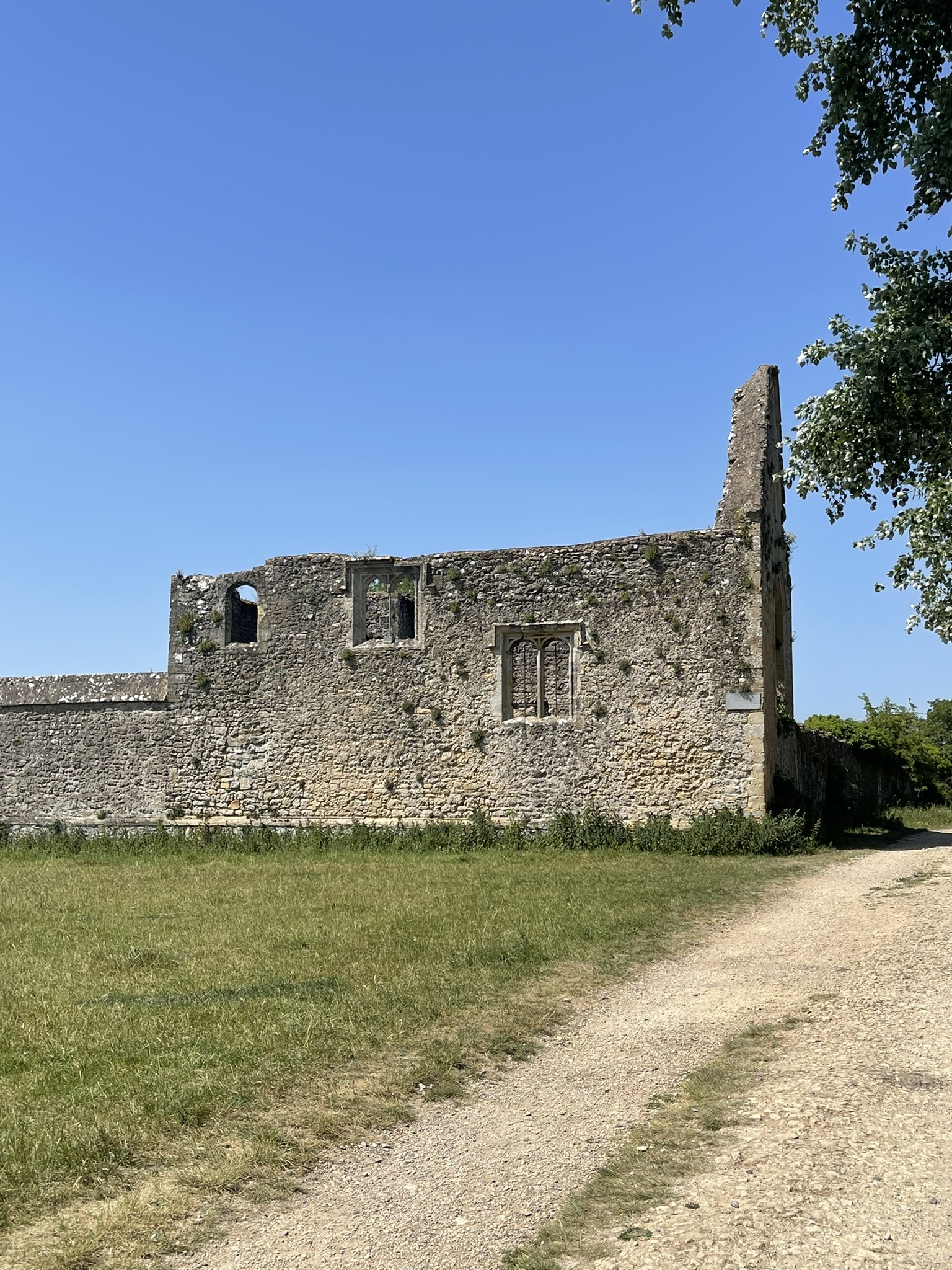
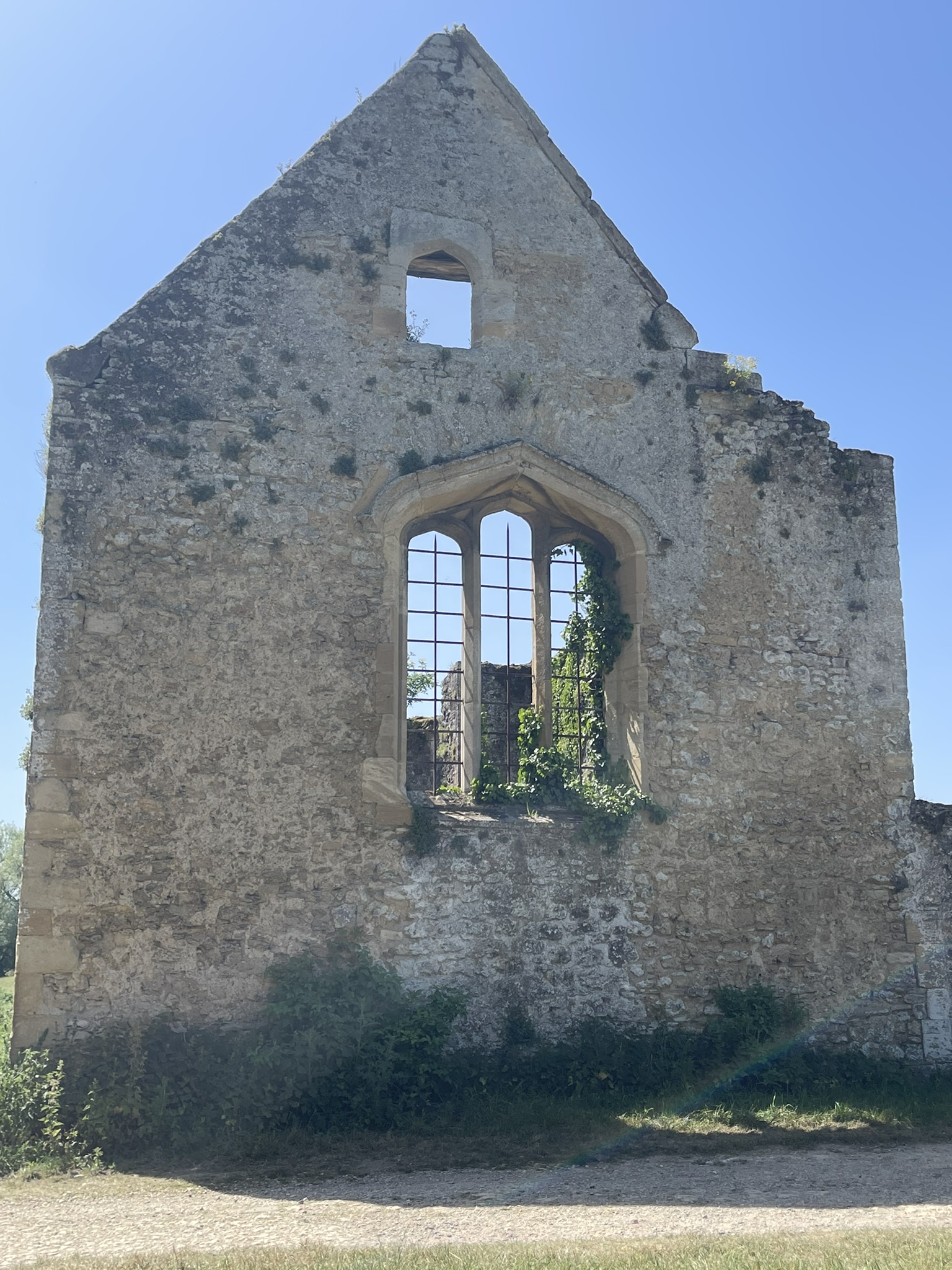
As we pushed on through the heat we approached Godstow Lock which has the distinction of being the highest hydraulic-operated pound lock on the River Thames. Just beyond it, the ruined walls of Godstow Abbey stand in a meadow beside the river. The abbey was founded in 1133 by Edith of Winchester, widow of Sir William Launceline, who had a vision telling her to build a place in God’s name, and looked north one night to see a light over Godstow. The abbey is most famous as the burial place of ‘Fair Rosamund’ de Clifford, mistress of Henry II, who died and was buried here in 1176. At the Dissolution, the abbey was given to Henry VIII’s physician, George Owen, who tore down the church and built a mansion. In 1645 it was badly damaged in the Civil War, and stone from the site was robbed for local buildings. Today the ruins are owned by the University of Oxford, quietly crumbling beside the path.
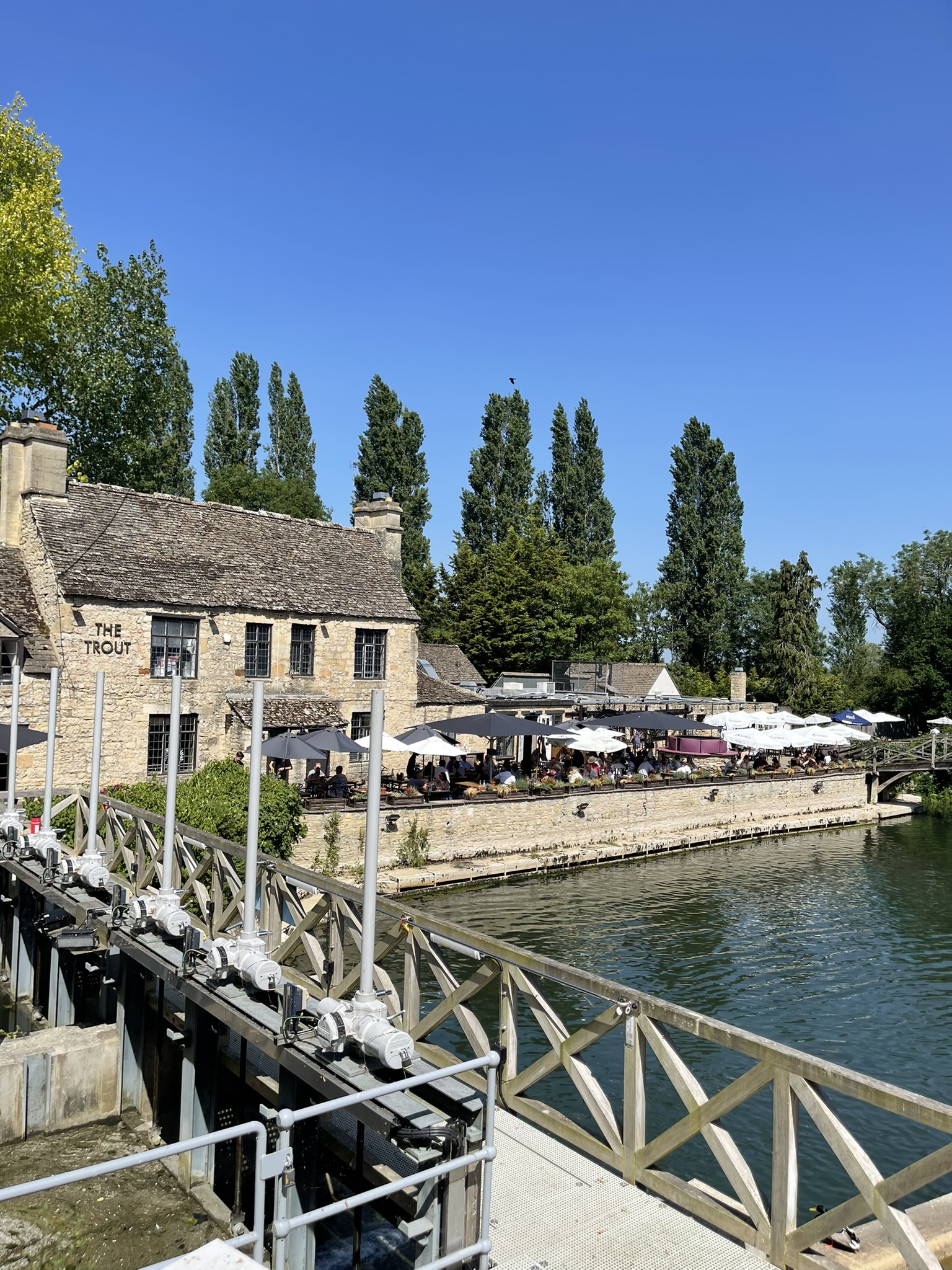
We didn’t need much persuasion to pop into The Trout at Godstow. Sitting just across the bridge from the abbey ruins, the cool shade and a cold drink were absolutely non-negotiable. We sat overlooking the bridge. The stone bridge was in existence in 1692 and was probably the one held by the Royalists against Parliamentarians in 1645, during the English Civil War. It has two arches, one being pointed and the other rounded. I could have sat here all afternoon, but we still had a few more miles to go.
“And above Godstow Bridge, when hay-time’s here
In June, and many a scythe in sunshine flames,
Men who through those wide fields of breezy grass,
Where black-winged swallows haunt the glittering Thames,
To bathe in the abandoned lasher pass,
Have often passed thee near,
Sitting upon the river bank o’ergrown:
Marked thy outlandish garb, thy figure spare,
Thy dark vague eyes, and soft abstracted air;
But, when they came from bathing, thou wert gone.”– Matthew Arnold, The Scholar-Gipsy
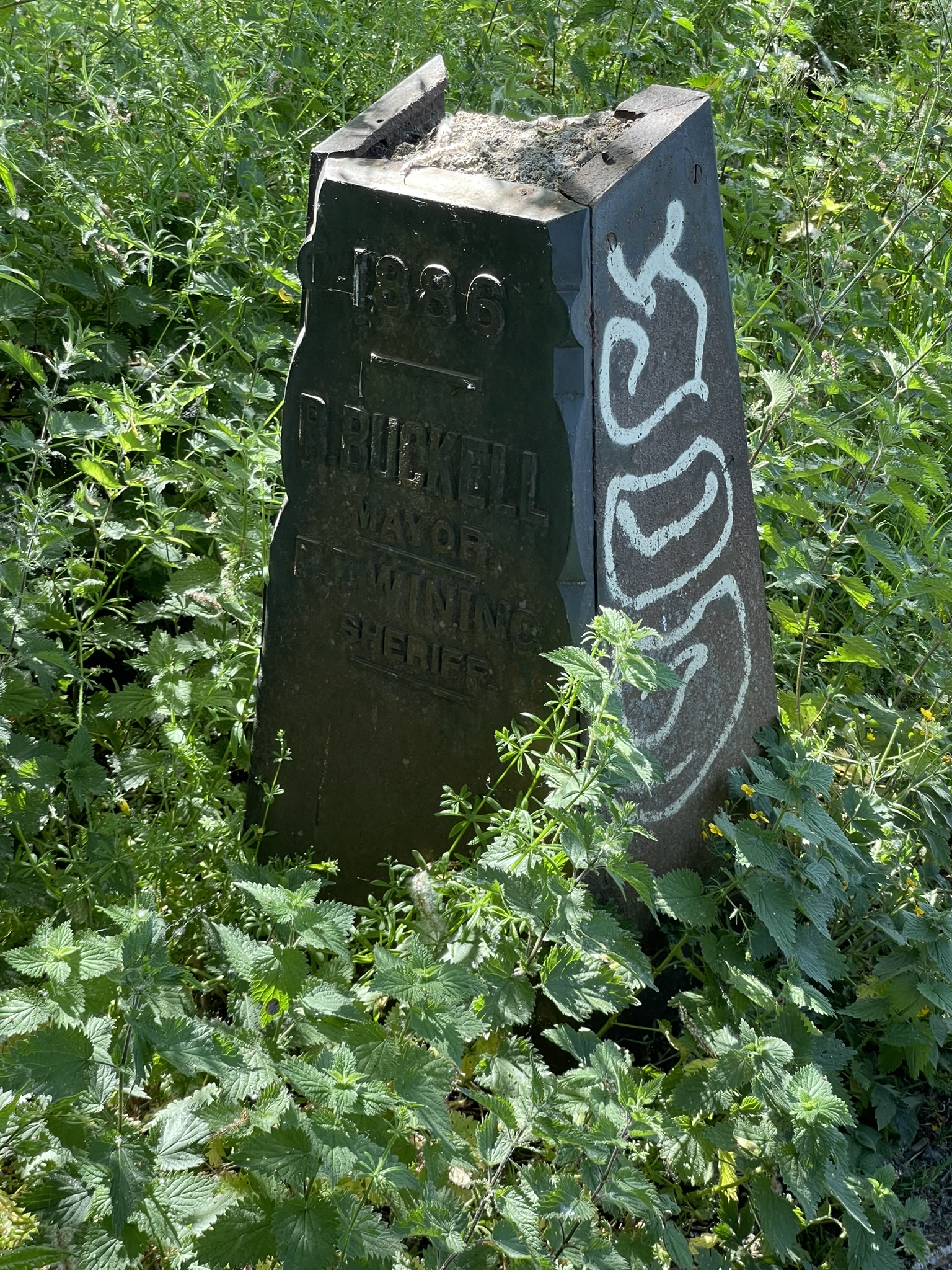
We continued on our way and just past Godstow Bridge, we came across a stone marker that you can easily walk straight past. This marker is one of several set in 1886 during the first mayoralty of Sir Robert Buckell to define Oxford’s municipal and parliamentary boundaries. It consists of a stone marker encased in metal, with the top originally featuring the city of Oxford’s coat of arms shield – now missing and replaced with cement. A small piece of civic history embedded in a hedgerow.
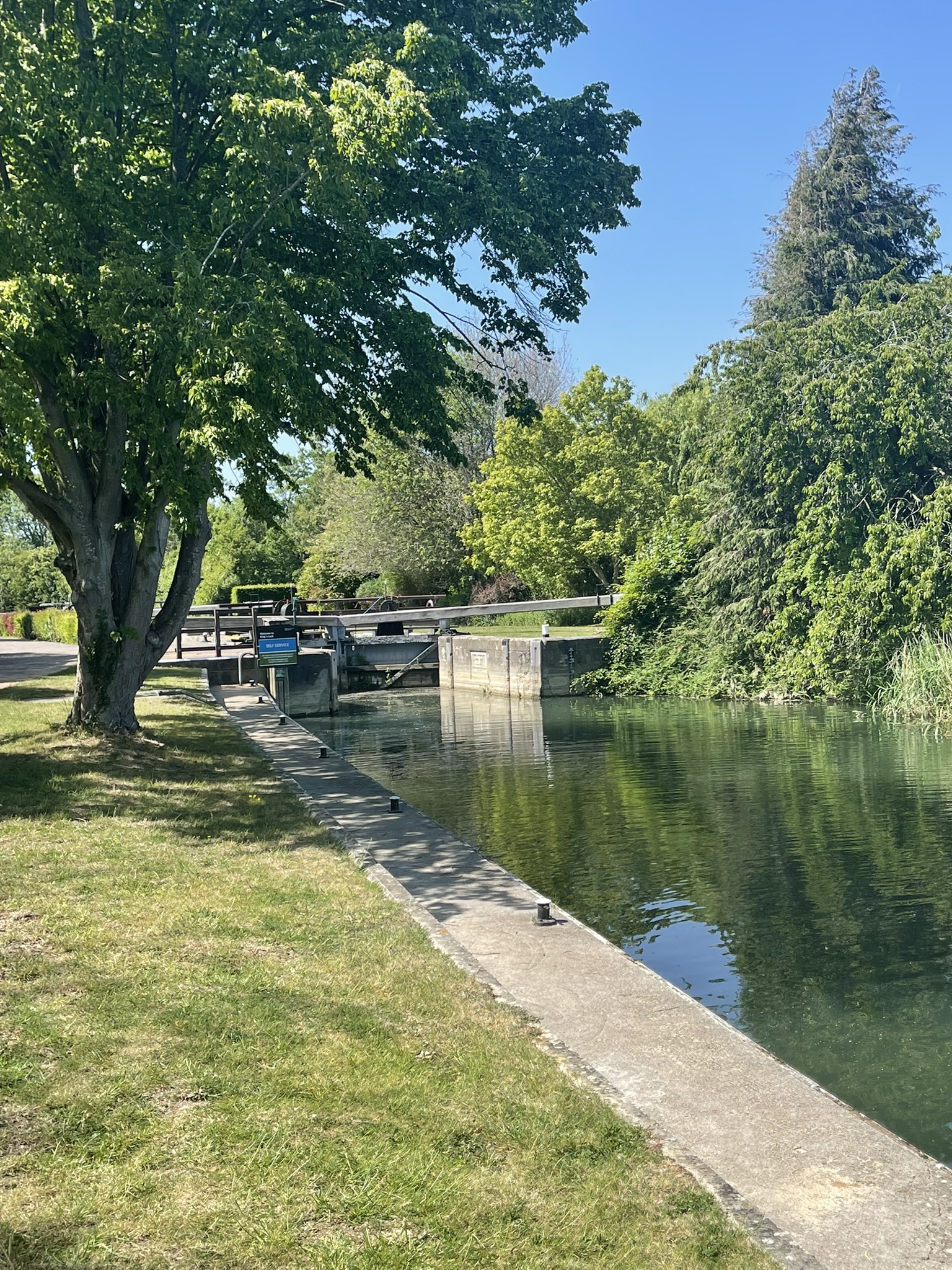
Just upstream is King’s Lock, where the Thames reaches its northernmost point. The lock itself has an interesting history: a weir and fish traps were recorded on the site as far back as 1289, and it wasn’t until 1928 that the pound lock, still in use today, was built to replace a flash lock. It has the smallest fall of any lock on the river, just 0.77 metres.
Beyond King’s Lock, the character of the walk shifts completely. Open meadows, wide skies, no shade, no trees, no access to the river. In May record heat, this stretch was genuinely brutal. We took any shade we could find – which wasn’t much – and I carried Cher for most of it. When we finally found a spot where she could reach the water, she didn’t hesitate.
The dark canopy of Wytham Woods on the hillside to the south was a tantalising sight, I just wished that those trees wre closer to the river to provide us with much needed shade. The 3000 acres of woodland is owed by the University of Oxford. The site is exceptionally rich in flora and fauna, with over 500 species of plants, a wealth of woodland habitats, and 800 species of butterflies and moths.

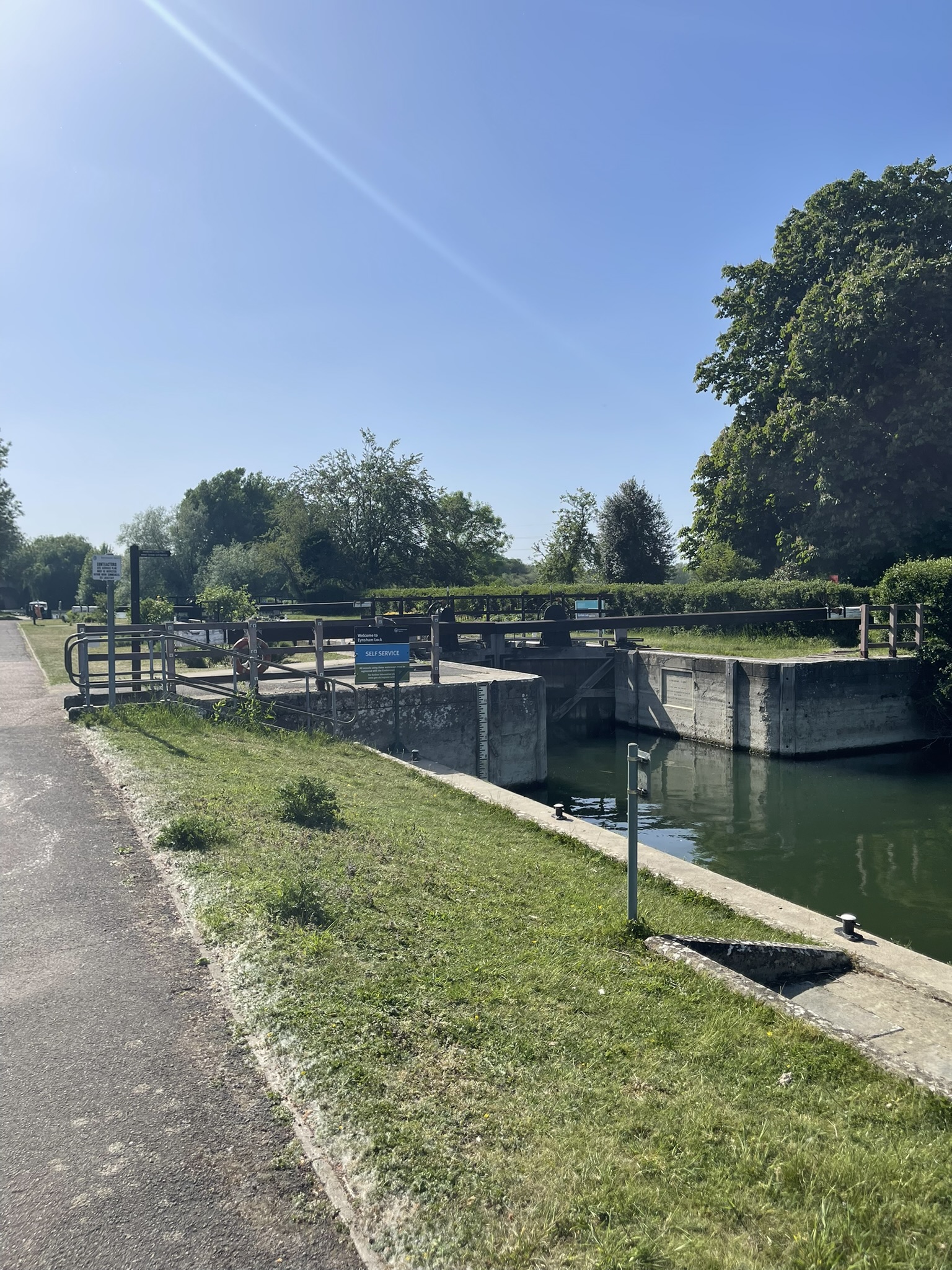
We had a rest stop at Eynsham lock which was built in 1928 – at the same time as King’s Lock as part of the push to make the upper Thames navigable all the way to Lechlade. By now we were counting down the steps.
And then finally we reached our destination for today – Swinford bridge. Constructed in 1769 by the Earl of Abingdon in Georgian style, the bridge replaced an ancient ferry service and has been operating ever since under its own Act of Parliament. The Act allows the bridge owner to collect tolls and – remarkably – makes the building of any other bridges across the river illegal for three miles either side. By repute, the owners pay no tax on the toll revenue, a perquisite granted by King George III himself. Today that toll is just 5p per car – making it one of the great bargains of the British road network!
The pub where I was staying – The White Hart – was another twenty minutes beyond the bridge, but the Talbot Inn in Eynsham was exactly what was needed – a celebratory pint! Our first day complete in sweltering heat! Tomorrow we had a 13 mile walk ahead of us, and it was going to be even hotter!